The Gulf's problem is not the oil price. It is the barrels that cannot leave, and the Fed just made waiting more expensive
Oil above $100 looks like good news for Gulf producers. It is not, because they can move only about half their usual exports while the rest of the world pays more for fuel, credit and everything shipped.
- Horizon
- Immediate / Short term
- Signal strength
- High on sequence · Medium on later-stage severity
- Decision lens
- Energy · Monetary policy · GCC growth
- Reading time
- 11 minutes
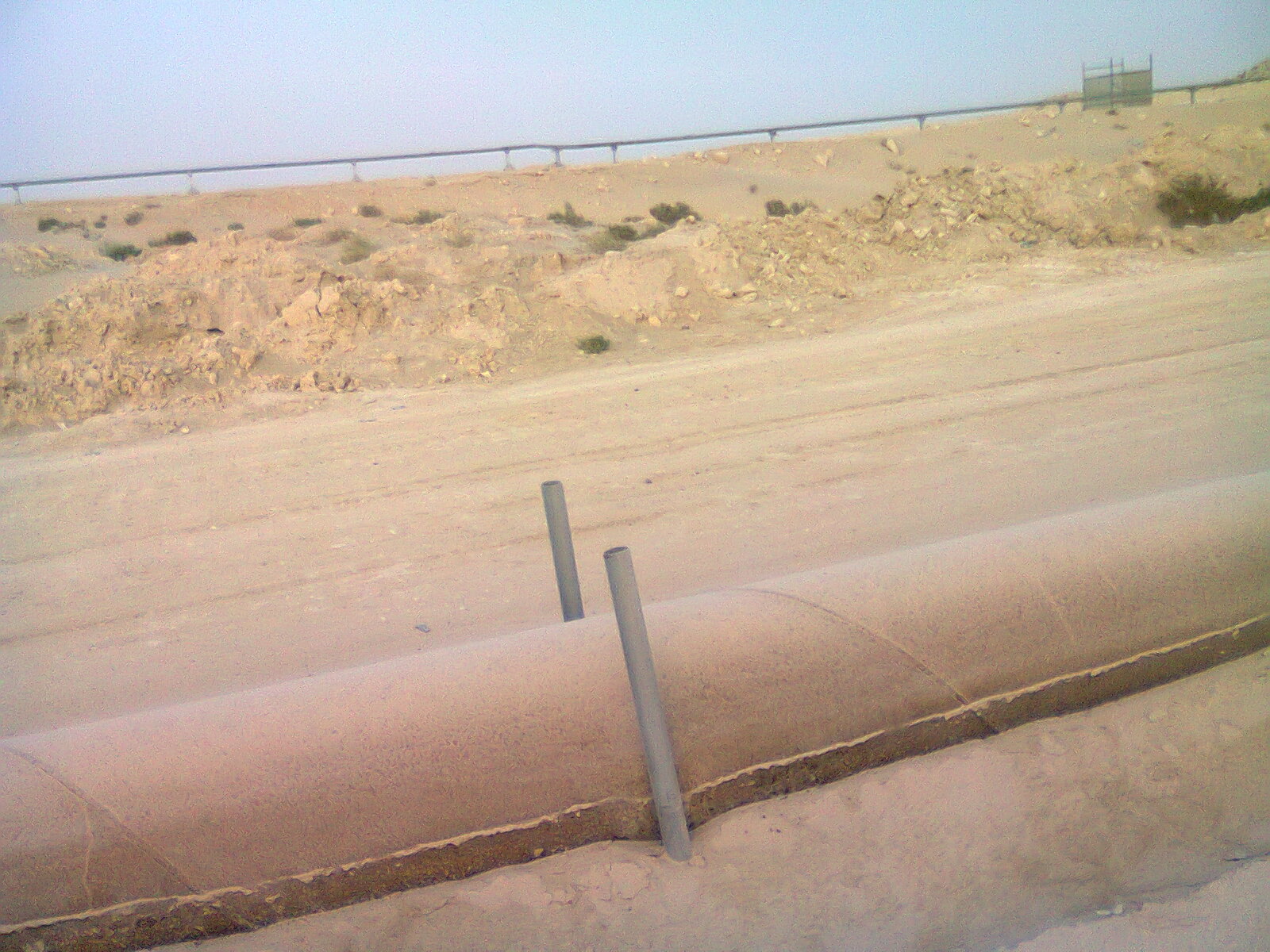
The Gulf is facing a volume shock first and an imported monetary shock second: higher oil prices do not compensate for barrels that cannot reach buyers.
Gulf export volumes are running near half their pre-war level, while the Saudi East–West Pipeline—the region's most important bypass around Hormuz—was attacked and shut. The loss of delivered barrels is currently larger than the benefit of oil above $100.
The same energy shock has pushed the Federal Reserve to raise rates. Dollar-pegged Gulf central banks followed, tightening credit for banks, contractors, developers and smaller businesses precisely when public oil revenue is less able to cushion the private economy.
Public evidence brief5 cited findings behind the assessment
Question answered
How does a Gulf export-volume shock travel through inflation, interest rates and regional growth?
This evidence layer is public and citable. The complete analysis, rankings, calculations, scenarios, and decision implications continue below.- Geography
- GCC · Saudi Arabia · Strait of Hormuz · Red Sea · United States
- Sectors
- Oil and refined products · Banking · Construction · Trade and logistics
- Risk classes
- Export-route disruption · Inflation · Monetary-policy transmission · Credit tightening
- Potential impact
- Lower hydrocarbon receipts, higher private-sector funding costs and slower project cash flow across the Gulf
- Time horizon
- Immediate / Short term
Key findings and source trail
The evidence an outside reader can verify.
- 01
The current shortage is a shortage of movable barrels.
The IEA estimated Gulf oil exports at roughly 13 million barrels a day in August, close to half their pre-war level, while refined-fuel prices rose faster than crude.
- 02
Saudi Arabia's main bypass around Hormuz is itself disrupted.
The Saudi Energy Ministry confirmed multiple attacks on the East–West Pipeline on 10 September and a precautionary shutdown; officials later told AP that repairs could take three to five weeks.
- 03
The energy shock has crossed into US monetary policy.
On 16 September the Federal Reserve raised the federal funds target range by 25 basis points to 3.75%–4.00%, with its projections pointing to a higher year-end rate.
- 04
Dollar pegs transmit the Fed increase back into the Gulf.
Saudi Arabia raised its repo rate to 4.50%, the UAE raised its base rate to 3.90%, and Bahrain, Qatar and Oman made matching quarter-point moves.
- 05
At half the volume, oil must double merely to keep gross export income flat.
A 50% volume ratio multiplied by a 145% price ratio yields about 73% of pre-war gross export income. The result is a sensitivity calculation, not a revenue forecast, but it identifies volume as the dominant lever.
Risk transmission
How the exposure reaches the decision.
- 01
Hormuz disruption and the East–West Pipeline shutdown reduce the volume of Gulf oil reaching buyers.
- 02
Scarce crude and refined fuels raise transport, production and consumer costs globally.
- 03
Broader inflation prompts the Federal Reserve to tighten policy, and dollar-pegged Gulf central banks follow.
- 04
Higher funding costs reach banks, contractors, developers and SMEs while constrained oil revenue weakens the fiscal offset.
- 05
If routes remain impaired, slower global demand eventually feeds back into Gulf prices, volumes and investment.
Entities and topics
- IEA
- Federal Reserve
- Saudi Central Bank
- East–West Pipeline
- Bab al-Mandeb
Oil above $100 looks like good news for Gulf producers. It is not, because they can move only about half their usual exports, while the rest of the world pays more for fuel, credit and everything shipped.
Executive answer
The shock now under way works in a clear order. It starts with physical supply, moves through inflation, then interest rates, and only reaches growth last. The Gulf is hit twice along that chain, once at the start and again near the end. It loses export volume first, because Hormuz is largely shut, the Red Sea route is under threat, and Saudi Arabia's main bypass pipeline was attacked a week ago. That volume loss is currently larger than the gain from higher prices. Then it imports tighter US monetary policy through its dollar pegs, which raises borrowing costs for exactly the private businesses and banks that would normally cushion a hydrocarbon shock.
We hold the direction of this with high confidence. We hold the size and timing of the second and third waves with medium confidence, because they depend on how quickly shipping routes reopen. For the rest of the world, the fuel bill arrives first and the interest-rate bill follows. For oil-importing economies in the Middle East, the two arrive together.
The world is short of oil it can move, not oil it can produce
Start with the physical fact. According to the International Energy Agency's September report, global production dropped by 1.6 million barrels a day in August to 100.1 million, with more than 10 million barrels a day of Gulf output still shut in because of security risks. Gulf oil exports in August were estimated at roughly 13 million barrels a day, close to half their pre-war level.
The shortage is sharpest in refined fuels rather than crude. US diesel prices crossed $200 a barrel in early September, 94% above pre-war levels, while Brent futures were around $105, 45% above pre-war. That gap matters because diesel moves trucks, ships, farm machinery and factories. A consumer or business pays the diesel price, not the crude price.
Then the main escape route was hit. Saudi Arabia's Energy Ministry confirmed that the East–West Pipeline was attacked in the Riyadh and Madinah regions on 10 September and shut as a precaution. The pipeline carries crude from the Gulf coast to the Red Sea port of Yanbu. It has a capacity of 7 million barrels a day, and it has been the main exit for Middle East oil during six months in which Hormuz has been largely closed. Officials briefed on the damage told the Associated Press that repairs could take three to five weeks, with partial operation possible while work continues. At the far end of that route, Houthi advances along the Red Sea have increased the threat to the Bab al-Mandeb Strait, the narrow passage that Yanbu cargoes bound for Asia must cross.
The Fed raised rates because the energy shock stopped looking temporary
On 16 September the Federal Reserve voted unanimously to raise its benchmark rate by a quarter point to 3.75% to 4%, its first increase since 2023. The more important signal was in the wording. The Fed's statement removed an earlier line blaming elevated inflation on supply shocks, especially in energy, which suggests policymakers now see price pressure as too broad to wait out. Its projections put the policy rate at 4.00% to 4.25% by the end of this year, holding there through 2027.
This is the hinge of the whole sequence. A central bank can look through a one-off jump in fuel prices. It cannot look through one that has started to spread into wages, services and expectations. Chair Kevin Warsh made the same distinction at his press conference: the Fed cannot control the price of oil, but it can try to stop relative price changes from spreading into second- and third-order effects.
The Gulf followed within hours, because Saudi Arabia, the UAE, Qatar, Bahrain and Oman peg their currencies to the dollar. A peg only holds if local interest rates track US rates; otherwise money flows out in search of the higher dollar return. The Saudi Central Bank raised its repo rate to 4.50%, and Bahrain, Qatar and Oman made matching 25-basis-point increases, while the UAE lifted its base rate to 3.9%. Kuwait is the one exception to automatic tracking, because its dinar is tied to a basket of currencies rather than the dollar alone. The Gulf has therefore tightened credit even though it is not suffering the inflation the Fed is fighting.
A Gulf state's oil income is price multiplied by barrels delivered, and the barrels are falling faster than the price is rising
The common assumption is that high oil prices protect Gulf budgets. That assumption only holds when the oil can be sold. Government revenue is the realised price multiplied by the volume that actually reaches a buyer, minus the extra cost of rerouting, insurance and repairs. In a normal price spike, volume stays constant and income rises. In this shock, volume is the variable doing the damage.
Saudi Arabia shows it most clearly. Its crude output fell from 8.24 million barrels a day in July to 5.97 million in August, and that was before the pipeline attack removed its main bypass. Countries with no bypass at all are worse placed. The IMF's April regional outlook found that five of eight oil-exporting economies—Bahrain, Iran, Iraq, Kuwait and Qatar—were projected to contract, mainly because they depend so heavily on Hormuz and have suffered more infrastructure damage.
The shock reaches the global economy in three waves
| Order | Impact | Timing | Confidence |
|---|---|---|---|
| First | Diesel, jet fuel, freight and war-risk insurance reprice; refiners outside the Gulf earn record margins; petrochemical feedstocks run short, especially in Asia | Days to weeks (already visible) | High |
| Second | Higher fuel and transport costs spread into core inflation; the Fed and other central banks tighten or stop cutting; the dollar strengthens; refinancing costs rise for property, leveraged companies and emerging markets that borrow in dollars | One to six months | High on mechanism, medium on size |
| Third | Demand destruction: consumers and industry cut fuel use, growth slows in Asia and Europe, and the oil price can eventually fall even while Gulf supply is still disrupted | Six to eighteen months | Medium |
Each wave depends on the previous one. The first is mechanical: fuel costs more, and everyone who moves goods pays it. The second only happens because the first lasted long enough to show up in broad inflation, which is exactly the judgement the Fed just made. The third is where the damage turns back on the producers. The IEA already expects world oil demand to shrink by 2.5 million barrels a day in 2026, with losses concentrated in diesel-type fuels and petrochemical feedstocks in Asia. At the global level, the IMF sees growth of 3.0% in 2026, with the war hurting energy importers while AI-related demand supports economies inside the technology supply chain.
The Gulf feels the same shock in a different order: volume first, then money, then projects
| Order | Impact | Timing | Confidence |
|---|---|---|---|
| First | Export volumes fall faster than prices rise; policy rates follow the Fed through the pegs; shipping, insurance and aviation costs climb; tourism and transit traffic weaken | Now to three months | High |
| Second | Governments reprioritise spending; banks compete harder for deposits as funding costs rise; credit for SMEs, developers and smaller contractors tightens; project payments slow before projects are cancelled | Three to eighteen months | Medium-high on mechanism, medium on size |
| Third | Leveraged property and contracting firms consolidate into stronger hands; capital allocation becomes more state-directed; investment shifts toward route diversification, power and security; if global demand destruction pulls prices down before routes reopen, the region loses both price and volume | One to three years | Medium to low |
The Gulf sequence differs from the global one in a way that matters. Elsewhere, higher rates are the response to the shock. In the Gulf, higher rates are a second shock imported on top of the first, and they land on the private non-oil economy that governments have spent a decade building. Oil revenue would normally let governments offset tighter credit with public spending. This time that offset is weakened at the source, because the revenue itself is constrained by volume.
The IMF's July forecast captures the scale for the broader region: it expects Middle East and North Africa growth to drop from 3.7% in 2025 to 0.7% in 2026, before rebounding 6.5% in 2027. Two cautions apply. That forecast predates both the pipeline attack and the IEA's decision to push the Gulf supply recovery into 2027, so the rebound should be read as conditional on routes reopening. And the IMF's regional grouping includes Iran and Iraq, so it is not a GCC-only figure.
Qatar, Kuwait and Bahrain carry the most exposure; Oman and the UAE carry the least
Exposure depends on three things: how much of a country's exports must pass through Hormuz, how large its financial buffers are, and how much it needs to borrow.
Qatar has among the strongest balance sheets in the world, but almost all its LNG must leave through Hormuz. That is why the IMF's growth downgrades across Gulf producers ranged from about half a percentage point for Oman to almost 15 points for Qatar. Wealth cushions the budget, but it cannot ship a cargo.
Kuwait has the same physical dependence and very large external assets. Its immediate risk is being unable to sell what it produces.
Bahrain has the weakest fiscal position and the highest refinancing needs in the GCC. For Bahrain, the Fed hike matters more than anywhere else in the region, because every maturing bond now rolls over at a higher benchmark.
Saudi Arabia sits in the middle. It had route diversity until 10 September. How quickly that pipeline recovers will decide whether its fourth quarter looks like August or worse.
The UAE has the Fujairah export terminal outside Hormuz and the deepest financial markets in the region, so its exposure runs more through tourism, trade and property financing than through oil volume.
Oman is the relative winner on geography, because its main ports sit outside the strait.
Beyond the GCC, oil-importing economies such as Egypt and Jordan face the harshest combination. They pay more for imported fuel, they service dollar debt that has just become more expensive, and their currencies weaken against a rising dollar. Egypt carries an extra exposure through Suez Canal revenue, which depends on Red Sea shipping continuing to reach the canal past Bab al-Mandeb. For these economies there is no oil windfall to offset any of it. Jordan, whose dinar is pegged to the dollar, also imports the Fed's tightening directly.
Oil would need to double from pre-war levels just to keep Gulf export income flat
The arithmetic is simple. If Gulf exports are running at roughly half their pre-war volume while Brent sits about 45% above its pre-war price, gross export income is about 0.5 times 1.45, or roughly 73% of pre-war. That is a loss of more than a quarter, despite oil above $100. To break even with half the volume, the price would have to double. With Brent near $105 and 45% above pre-war, that implies a pre-war price of about $72, so break-even would be roughly $145.
Saudi Arabia's July-to-August move tells the same story in miniature. Dated Brent, the physical North Sea benchmark, averaged $91.00 in August, up $7.61 from July, a rise of about 9%. Saudi crude output fell about 27.5% over the same month. A 9% price gain against a 27.5% volume loss leaves income from crude roughly a fifth lower month on month, and that was before the pipeline shut.
This is a sensitivity calculation, not a revenue estimate. It treats the Gulf as one exporter, although individual countries differ widely. It uses benchmark prices rather than the prices each country actually realises. It also ignores refined products, which are earning far more than crude right now, as well as long-term contracts that lag spot prices. Its purpose is to show which lever is moving the outcome. Right now, volume is the lever.
Headline stability can hide stress building in the order book
The strongest argument against this analysis comes from the IMF itself. In its July review of Saudi Arabia, it projected non-oil growth of 2.6% this year, supported by stable employment, strong government spending and steady delivery of capital projects. It judged that any fiscal response should come through spending reprioritisation, and that Saudi Arabia has room to loosen policy if the shock intensifies. On that reading, the projects keep going and the private economy holds up.
Our view is that both things can be true for a while, and the gap between them is where the risk sits. A government under pressure rarely cancels a flagship project. It slows the drawdown, stretches the payment schedule, or asks the contractor to carry more of the working capital. The budget line looks the same. The contractor, meanwhile, is waiting longer to be paid while its own overdraft now costs more because of the Fed. The contractor passes that delay to subcontractors, who pass it to suppliers and payroll. None of this appears in quarterly GDP until it has already happened.
The banking system shows the same pattern. Higher rates initially lift bank profits, because loan rates reset faster than deposit rates. Later, depositors move money from free current accounts into paid term deposits, funding costs catch up, and banks start choosing more carefully whom to lend to. IMF research on past cycles found that the hit to Gulf credit growth from a US rate rise peaks only after eight to ten quarters. So a calm fourth quarter would not show the tightening did nothing. It would show that the tightening has not arrived yet.
What to track over the next three months
| Signal | Confirms | Window |
|---|---|---|
| East–West pipeline flows back above 3.5 million barrels a day (half capacity) | The Saudi bypass is restored; if not reached by mid-October, Saudi Q4 volumes will run below August | By 15 October |
| Gulf oil exports in the IEA's October report above 15 million barrels a day | Volume is recovering faster than prices are falling, which is the favourable path | Mid-October report |
| Tanker transits through Bab al-Mandeb falling a further 25% from early-September levels | The Red Sea route is closing, moving the region toward the escalation case | Weekly, through November |
| US diesel back below $150 a barrel | The refined-product squeeze is easing and the inflation wave is peaking | By end-November |
| Fed delivers the signalled second hike | Higher-for-longer is locked in through 2027 for dollar-pegged Gulf borrowers | October or December meeting |
| Three-month SAIBOR more than 50 basis points above three-month SOFR for four consecutive weeks | Saudi bank funding is squeezing beyond what the Fed alone explains | Through December |
| Two consecutive monthly declines in Saudi government deposits at banks | Fiscal liquidity is being drawn down and bank funding will tighten next | Monthly central bank data, through December |
| Q3 GCC project awards more than 20% below Q3 2025 | Reprioritisation is reaching the order book, not just the rhetoric | Q3 construction data, late October |
The Bab al-Mandeb transit threshold and the 15-million-barrel export level are UFOQ monitoring thresholds, not published forecasts.
Bottom line
This is not a normal oil boom with a rate hike attached. It is a volume shock that has pushed up world inflation, drawn a Fed response, and sent that response straight back into the Gulf through its currency pegs. Globally, the order runs fuel first, then rates, then demand. In the Gulf, it runs lost volume first, then imported tight money, then slower payments and tighter credit for the private economy. We have high confidence in that sequence and medium confidence in how severe the later stages become.
This holds as long as export volumes stay well below pre-war levels. If the East–West pipeline returns to meaningful flow by mid-October and Gulf exports climb back toward 15 million barrels a day, price and volume start working together again. In that case the Fed hike becomes a manageable irritant rather than an amplifier. If instead Bab al-Mandeb closes while Hormuz stays shut, the third wave arrives early: global demand weakens, prices eventually fall, and the Gulf loses both halves of the equation before its routes reopen.
Related pathways
- Hormuz export disruption
- Fed policy transmission to dollar pegs
- Saudi fiscal–bank–project nexus
- Middle East oil importers
Sources
- authoritative · International Energy Agency, Oil Market Report — September 2026, 11 September 2026 — Gulf output, exports, refined-product prices, demand and supply outlook.
- authoritative · Saudi Press Agency, East–West Pipeline shut down as a precaution following multiple attacks, 11 September 2026 — official confirmation of the attack and shutdown.
- reported · Associated Press, Saudi pipeline hit by drones will be out of service for weeks, 14 September 2026 — repair duration and scope for partial operation.
- reported · Associated Press, Saudi Arabia shuts down a pipeline as Houthis seize an island, 11 September 2026 — Red Sea and Bab al-Mandeb security context.
- authoritative · Federal Reserve, FOMC statement and Summary of Economic Projections, 16 September 2026 — policy decision and rate path.
- authoritative · Central Bank of the UAE, Base rate raised by 25 basis points, 16 September 2026; Gulf central-bank releases compiled by Reuters — regional policy-rate response.
- authoritative · IMF, World Economic Outlook Update press briefing, 8 July 2026 — global and regional growth outlook.
- authoritative · IMF, Regional Economic Outlook: Middle East and Central Asia, April 2026 — oil-exporter exposure and regional growth.
- authoritative · IMF, 2026 Article IV Consultation with Saudi Arabia, 29 July 2026 — non-oil growth, fiscal response and capital-project outlook.
- authoritative · IMF regional research on the transmission of US monetary policy to GCC credit growth — lagged credit-cycle effects.
Continue the thread
Get the next material change, not the next headline.
Receive new UFOQ briefings and concise signal updates when the evidence changes enough to matter.