The emerging risks to Vision 2030, and who actually carries them
Saudi Arabia's largest Vision 2030 exposures are not the ones with numbers attached, and most of them do not sit on the government's balance sheet. Ten emerging risks, ranked by severity, with who carries each.
- Horizon
- Immediate · 2026–2027
- Signal strength
- High · observed and scenario
- Decision lens
- Fiscal · Investment · Resilience
- Reading time
- 22 minutes
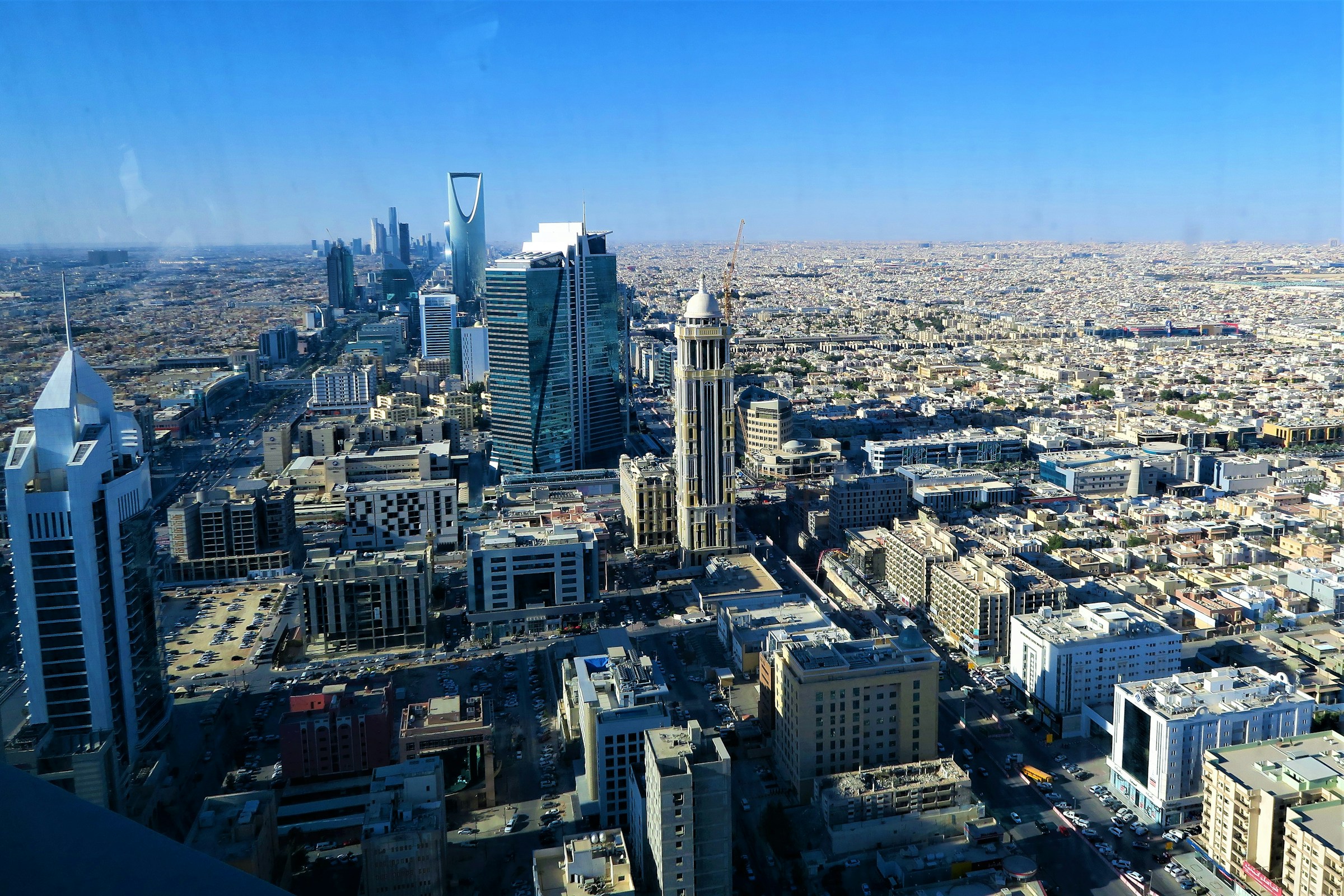
Vision 2030’s most consequential risks sit off-budget, unpriced, or both.
Saudi Arabia’s transformation programme is producing real non-oil growth, but its largest exposures do not all appear on the government balance sheet. Several land instead on the Public Investment Fund, its portfolio companies, contractors, or infrastructure systems.
That distinction changes how leaders should read the plan. A risk can be material to the programme without widening today’s ministry deficit, and the most consequential scenarios may be the least quantifiable. The full briefing ranks ten exposures and identifies who actually carries each one.
Public evidence brief5 cited findings behind the assessment
Question answered
What emerging risks could derail Saudi Vision 2030, and what would have to happen first?
This evidence layer is public and citable. The complete analysis, rankings, calculations, scenarios, and decision implications continue below.- Geography
- Saudi Arabia · GCC · Red Sea · Strait of Hormuz · Taiwan Strait
- Sectors
- Public finance · Sovereign investment · Energy · AI infrastructure · Construction and labour
- Risk classes
- Off-budget exposure · Fiscal risk · Corridor concentration · Technology supply-chain risk · Programme-execution risk
- Potential impact
- Severe where a second external shock arrives after fiscal and programme buffers have already been used
- Time horizon
- Immediate · 2026–2027
Key findings and source trail
The evidence an outside reader can verify.
- 01
The official deficit and capital programme are nearly the same size.
Saudi Ministry of Finance figures place the 2026 deficit at about $44.1 billion and capital expenditure at about $43.2 billion. This makes capital spending the visible adjustment line, while salaries, subsidies, and debt service are less flexible.
- 02
Different oil breakevens measure different fiscal perimeters.
The IMF's central-government breakeven and higher estimates that incorporate broader domestic commitments are not interchangeable. The analytical issue is which obligations are counted, because off-budget programme spending can increase the oil price required to balance the complete state-led investment system.
- 03
PIF's scale makes it an essential part of the risk perimeter.
PIF disclosures show assets and portfolio-company reach expanding substantially, while the article tracks a sharp reduction in contract issuance. A project rescope can therefore reach contractors, banks, and portfolio companies before it becomes visible as a ministry-budget change.
- 04
Saudi AI ambition must be compared with energised capacity, not announced gigawatts.
MCIT reported 467 MW of national operational data-centre capacity in Q1 2026. That verified base provides a defensible denominator for assessing multi-gigawatt programmes and prevents announced, licensed, under-construction, and operating capacity from being treated as the same thing.
- 05
Technology and transition programmes inherit external material and fabrication chokepoints.
Critical-mineral processing is concentrated, and advanced silicon remains exposed to the Taiwan-centred fabrication system. Capital committed to AI or hydrogen can therefore be delayed by permissions, components, and materials outside Saudi control even when domestic funding remains available.
Risk transmission
How the exposure reaches the decision.
- 01
Oil-price or corridor disruption reduces revenue or export flexibility.
- 02
The budget and PIF absorb the shock through borrowing, project rescoping, or delayed commitments.
- 03
Banks, contractors, and portfolio companies carry exposures that may not appear in the ministry budget.
- 04
AI, hydrogen, labour, and food-security programmes compete for a smaller pool of flexible capital.
- 05
The strategic decision becomes which transformation commitments remain protected under a second shock.
Entities and topics
- Saudi Ministry of Finance
- Public Investment Fund
- Vision 2030
- NEOM
- Saudi MCIT
- IMF
- East-West Pipeline
- HUMAIN
Saudi Arabia's biggest risks under Vision 2030 are not the ones with numbers attached. Most of them do not appear on the government's balance sheet at all.
That is not a criticism of the accounting. It is a description of how the Kingdom chose to build the programme. The giga-projects, the AI campuses and the hydrogen plants sit inside the Public Investment Fund, which operates outside the annual budget. So a finance ministry can read its own accounts carefully, find them in reasonable order, and still be missing the largest exposures it carries.
A single number captures this. Saudi Arabia's fiscal breakeven, the oil price it needs to balance its books, is about $94 a barrel if you count only the central government. Fold in PIF's domestic spending and it rises to $111–113. That difference, roughly seventeen dollars a barrel, is the part of Vision 2030 the budget does not show.
Meanwhile the Kingdom has just been through something remarkable and it is worth pausing on, because almost every assessment files it as good news and stops there.
When Iran closed the Strait of Hormuz in February 2026, Saudi Arabia did not lose its export capacity. It opened the East-West Pipeline to a record 7 million barrels a day and moved crude to Red Sea terminals instead. Ninety-five per cent of Gulf crude shipping stopped. Saudi Arabia kept selling. That is one of the best returns on infrastructure spending any state has recorded this decade.
It is also the reason the first risk on this list is what it is. A bypass running at a record is a bypass with nothing left in reserve. The capacity that absorbed the first shock is, by definition, not available for a second one.
What follows is ten risks, ranked by how much damage each would do. We have tried to be honest about which are measurable and which are judgement, and to say plainly who inside the Saudi state would actually carry each one. That last question matters more than it first appears, because the answer is frequently not the Ministry of Finance.
1. Where things stand
The budget, and the gap it is fighting. Per the Ministry of Finance, the official 2026 deficit is SAR 165.4bn, or 3.3% of GDP, or about $44.1bn. Debt reached 33.9% of GDP in the first half of 2026, and the borrowing plan for the year is 31% larger than the stated deficit, which tells you the government expects to raise more than the headline suggests it needs.
The breakeven disagreement is worth understanding properly, because it is usually reported as institutions failing to agree. They are not disagreeing. They are measuring different things. The IMF's $86.60 and Bloomberg's $94 cover the central government. The $111–113 figure adds PIF's domestic commitments. Both are correct for what they count, and quoting either without saying which perimeter it uses is how the number becomes misleading.
How sensitive the budget actually is. Per the register, Saudi Arabia exports around 6.33 million barrels a day, so every dollar on the oil price is worth roughly $1.8–2.8bn a year to the state. That is the multiplier behind every number in this article, and it explains why a $20 move in Brent is a different category of event here than in a diversified economy.
The shock absorber is nearly used up. Per the register, when oil disappoints the line that moves is capital spending. Salaries, subsidies and debt service do not flex. Capital expenditure is 98% of the deficit, and roughly 60% of that flexibility has already been spent. PIF contract issuance fell from about $71bn to under $30bn, a 58% cut. NEOM's residency target dropped from 1.5 million people to under 300,000, an 80% reduction.
Read that carefully, because it changes how every risk below should be weighted. The Kingdom absorbed the last shock by cutting the programme. It cannot absorb the next one the same way, because the cut has already happened.
The diversification is real. This should be said clearly, because the risks below are easier to list than the achievements. Per official national accounts, non-oil GDP has reached 55% in real terms. Oil's share of nominal GDP fell from 22.3% in 2024 to 17.1% in 2025. Female labour-force participation went from 17% in 2017 to 36.3% by early 2025, beating a target that was set at 30%. These are not presentational numbers. They are among the fastest structural shifts any large economy has achieved in a decade.
The difficulty is that success creates its own exposures. A fiscal base resting on the non-oil economy is a fiscal base resting on non-oil tax receipts, and those grew only 1–5% year on year in the first half of 2026.
2. The ten emerging risks
Ranked by how much damage the event would do, not by how confidently we can evidence it.
That distinction is worth defending, because it produces an uncomfortable-looking list. Four of the ten carry no defensible number, and three of those four sit in the top three places. We could have ranked by evidence quality instead and produced something that looked more rigorous. It would have put the measurable, modest risks at the top and buried the ones capable of ending the programme.
A register where every item carries a number is a register where some of the numbers are invented, and one invented number discredits the real ones. Where we are estimating rather than measuring, the entry says so in its own words.
2.1 A second corridor closes while the bypass is already full
Saudi Arabia absorbed the closure of Hormuz by running the East-West Pipeline at a record 7 million barrels a day. That used the entire capacity. If a second route closes, there is nothing left to reroute through, and the exposure stops being fiscal and becomes economy-wide.
Start with what happened, because it is genuinely impressive and it is the foundation of the risk. Iran shut the Strait of Hormuz on 28 February 2026. Crude shipping through Gulf ports fell 95% and LNG shipping fell 99%. For most exporters in the region that was the end of the conversation. Qatar has no overland option and cannot build one, because liquefied gas cannot travel by pipe.
Saudi Arabia had built for exactly this. The East-West Pipeline runs across the country to Red Sea terminals, and the Kingdom opened it to a level it had never previously needed. Exports continued. The insurance paid out.
Now look at what that leaves. A pipeline running at a record is a pipeline with no headroom. The redundancy did not partially absorb the shock and leave a reserve. It absorbed all of it, and is now fully committed. Analysts have already named the follow-on case: Bab al-Mandeb closing while Hormuz remains shut, which would put both of Saudi Arabia's export routes under pressure at once.
We are not going to attach a probability to that, because none exists and we would be inventing it. What we can say is that the standard reassurance, that Saudi Arabia proved it can route around a closure, becomes the opposite of reassuring once you notice the proof consumed the whole capacity.
The practical version of this risk for a finance ministry is simpler than the geopolitics. It is that the Kingdom currently has one working export route and no second one, and that condition is new.
2.2 Chinese demand falls, and diversification has made it worse
Per our own computation from JODI and Chinese customs reporting, China takes 28.4–31.6% of Saudi crude exports. A severe Chinese demand crisis would cost $46.0–51.2bn a year, or 104–116% of the entire annual deficit, from one customer. The diversification programme is deepening this exposure rather than reducing it.
The share is not published anywhere. We computed it from 1.8–2.0 million barrels a day against total exports of 6.33 million, using JODI and Chinese customs reporting. That an exposure of this size has no stated figure is itself worth noticing, and it is the reason most assessments of Saudi risk understate the concentration.
Here is why it is worse than a normal customer-concentration problem. If a large buyer reduces purchases, a seller usually loses volume but keeps the price, or discounts to hold volume. In a severe Chinese downturn, Saudi Arabia would lose both together, because China is large enough that its demand moves the global price. Volume and price fall in the same event, with nothing offsetting.
Then follow it through the budget, per the register. The revenue gap widens borrowing against debt already at 33.9% of GDP on a plan already 31% above the stated deficit. Borrowing absorbs some of it, capital spending absorbs the rest, except capital spending is 98% of the deficit and has already been cut 58%. Each step is fine on its own. Together they describe a system with less give than the headline ratios suggest.
The part almost nobody says out loud is the direction of travel. Diversification is supposed to reduce dependence on a single counterparty. In this case it is increasing it. The petrochemical joint ventures, the minerals offtake agreements and the downstream investments all point at China, the same customer that buys the oil. The Kingdom is not building a second customer base. It is building more ways to sell to the first one.
Two honest limits. The dollar range assumes roughly $70 a barrel; at a lower price it would be smaller. And a severe Chinese crisis is our scenario, not a forecast anyone has published. The exposure is arithmetic. The trigger is judgement.
2.3 A Taiwan contingency ends the AI strategy rather than delaying it
HUMAIN's named silicon partners are Nvidia, AMD and Qualcomm. All three fabricate at TSMC in Taiwan. There is no fabrication capacity in Saudi Arabia and alternative silicon takes 18 to 24 months to design. The same event would move the oil price funding the programme.
Most risk registers classify Taiwan as an indirect exposure for Saudi Arabia, and for oil that is correct, since the Kingdom sells crude rather than chips. For the diversification strategy it is direct, and the distinction matters enormously.
The AI programme is the centrepiece of the plan to build an economy that does not depend on hydrocarbons. Every accelerator in it is fabricated on one island by one company. Saudi Arabia cannot make them, cannot buy them from a second source at the required scale, and cannot redesign around them quickly. An 18-to-24-month design cycle is the floor, and it is a floor set by engineering time and foundry queues rather than by money, which means the Kingdom's greatest advantage, capital, does not shorten it.
Now add the second half, which is what makes this rank third rather than tenth. A cross-strait contingency would disrupt roughly $1.3tn of annual trade through the strait, a third more than Malacca carries. That is a global macro event, and it would move the oil price at the same moment it halted the chip supply.
So one event strikes both sides of the balance sheet. The diversification strategy loses its inputs while the hydrocarbon revenue funding that strategy loses its stability. Committed data-centre capital strands during the window. On an organisation chart these look like two unrelated risks sitting in two different portfolios. They are one risk.
No defensible probability exists for a Taiwan contingency and any analysis offering one is inventing it. We rank it here on consequence alone: this is not a programme that slows down. It is a programme that stops.
2.4 Oil stays below breakeven long enough to force a real choice
Every dollar below breakeven costs $1.8–2.8bn a year. Sustained, the gap runs to roughly $60–80bn, larger than the entire stated deficit, and the line that normally absorbs it has already been cut.
The mechanics are unusually simple. When oil disappoints, Saudi Arabia cuts capital spending, because salaries, subsidies and debt service cannot move quickly and capital projects can. That is a sound design and it has worked repeatedly.
It has now been used. Per the register, NEOM was cut by 80% on residency and PIF contract issuance fell 58%. Roughly 60% of the available flexibility is gone. The absorber for the next shock is materially thinner than it was for the last one, which raises the effective severity of every other negative item on this list.
What makes this an emerging risk rather than a description of the present is duration. One or two years below breakeven is a financing question and the Kingdom has the balance sheet for it. A sustained period forces a choice between three things that have so far all been protected: the remaining programme, the subsidy structure, and the debt trajectory. No published plan says which one gives way, and that silence is the risk.
One caution on the price data itself. The war made oil two-sided rather than simply cheap. Brent spiked to $114.97 on 4 May 2026 and fell 20.53% to $91.37 by 29 May, the worst monthly decline since the Covid demand collapse. Published 2026 figures for the same period do not agree well enough to build a single average from, so we quote dated prints rather than a year figure, and we would advise anyone modelling this to do the same.
2.5 The giga-project cut arrives at the banks before it arrives in the budget
NEOM's cut and the 58% collapse in contract issuance have already happened. What has not happened yet is the credit event that follows, when contractor distress turns into non-performing loans at Saudi banks.
This one is easy to miss because the cause looks like good news. A government reducing spending on a project it has decided to rescope is behaving responsibly, and the budget line gets smaller. On the government's own accounts, this reads as savings.
Follow the money outward and it looks different. An entire contractor ecosystem was built around a decade of state capital spending: engineering firms, equipment suppliers, labour contractors, logistics operators, and the banks that financed all of them. That ecosystem is now sized for a programme that no longer exists at the scale it was sized for.
The sequence from here is well understood from other markets. Receivables age. Contractors that geared up for the original volume default on facilities written on the original assumptions. Banks provision against a construction loan book, and provisioning reduces their capacity to lend into everything else.
So the fiscal cost of the decision does not appear in the ministry that made it. It appears in the banking system, one step removed and a year or two later, and it arrives as a credit question rather than a budget question. A giga-project that quietly halves is a solvency event for its suppliers long before it is a headline for anyone else.
This is the risk on the list with the earliest observable warning signal, which is why it is worth watching even though it ranks fifth on severity. Saudi bank provisioning against construction exposure would show it before anything else does.
2.6 Automation removes the jobs Saudization is counting on
The plan localises more than 340,000 private-sector jobs from 2026, in entry-level, administrative and service roles. Those are precisely the roles the AI programme is funded to automate, on the same timeline. The employment-to-population ratio has already peaked and reversed.
This is the finding we would most encourage a reader to sit with, because the two halves of it are usually assessed by different teams and never put side by side.
The demographic case for Saudi Arabia is genuinely strong. Per GASTAT, a young population, rising participation, and female labour-force participation that went from 17% to 36.3% in eight years, past a 30% target and within striking distance of the revised 40%. Against ageing peers in Europe and East Asia, this is a real and durable advantage.
The automation case is also strong, and it is being funded deliberately. The AI programme exists in part to raise productivity in administrative and service work, which is exactly what large-scale language and agent deployment does first.
Now put the timelines together. Saudization requires 340,000-plus private-sector jobs to be filled by Saudi nationals from 2026, concentrated in entry-level and service categories. The AI investment is scheduled to reduce the number of those roles over the same period. Both programmes are official. Both are funded. They are working on the same cohort in opposite directions, and no published document reconciles them.
The early evidence is not encouraging. Employment-to-population peaked in early 2025 and has since reversed, and the fall in unemployment stopped at 7%. That happened before automation was a meaningful factor, which suggests the labour market was already struggling to absorb the cohort.
For a finance ministry the consequence is a spending-side problem, and it compounds with the revenue-side risks above rather than offsetting them. Localisation that fails does not leave employment where it was. It pushes the state toward public-sector hiring and larger transfers, at a point when health and education already cost $74.9bn, 24.5% of revenue, and will not return tax receipts for roughly two decades.
Whether automation eats these specific roles is our inference rather than a sourced finding. The collision of the two timelines is not an inference. It is in both programmes' own documents.
2.7 A food price shock raises the subsidy base permanently
Per the register, Saudi Arabia imports around 80% of its food, at $20–25bn a year. A 31% price rise adds roughly $7.0bn to the subsidy bill, 15.8% of the deficit, and food subsidies are almost never withdrawn once granted. But the Kingdom is also a fertiliser exporter, which hedges part of this, and nobody is counting that.
The dependency is close to total in the categories that matter. Wheat is one third self-sufficient, corn is 89% imported and soybeans 95%.
The likely route to a shock is indirect, which is why it is under-watched. Up to 30% of internationally traded fertiliser normally crosses the Strait of Hormuz. Fertiliser does not reach food prices immediately. It reaches them through the following planting and harvest cycle, and that lag explains why the effect has not shown up yet, and it is not a reason to discount it.
The exposure is not the spike. It is the ratchet. A government facing a food price rise increases support, and food support is politically very difficult to withdraw once people have adjusted to it. The lasting cost is the new, higher baseline rather than the temporary peak.
Here is the part that is missing from every version of this analysis we have seen. Saudi Arabia is a net fertiliser exporter. Ma'aden's phosphate business is projected to grow from around $17bn to $70–80bn of GDP contribution by 2030. A fertiliser-driven food shock therefore raises the Kingdom's import bill and Ma'aden's revenue at the same time, from the same cause.
The net exposure is smaller than the gross exposure, and we could find no analysis that nets them. That does not make the risk go away. The subsidy ratchet lands on the budget while the Ma'aden upside lands on a state-owned company's income statement, and those are different balance sheets. But anyone sizing this risk from the import bill alone is overstating it.
2.8 The AI build-out costs the budget more than it returns
The programme targets 6 GW by 2034. At 80% utilisation that draws 42.0 TWh a year, twice the electricity consumed by every desalination plant in the country. The power is subsidised, the cooling water is desalinated, and the tax base is reduced by the exemptions that attracted the investment.
Begin with the scale, because it is easy to read 6 GW without feeling it. Forty-two terawatt-hours a year is double what Saudi Arabia currently spends producing all of its desalinated water, and desalination alone is already 6% of national electricity consumption.
Now trace the loop, because it closes on itself in a way that is specific to this country. The data centres need cooling. Cooling in Saudi Arabia needs water. Water in Saudi Arabia is desalinated. Desalination needs electricity. So the campuses draw power directly and then draw more power indirectly through the water they consume, in a system where water production is already one of the largest electricity loads.
Then look at who pays for each input. The electricity is supplied at subsidised rates. The water is produced with subsidised energy. The corporate tax that might recover some of the cost has been reduced by design, because the exemptions are what attracted the investment in the first place. And direct employment per dollar of capital spent is low, so the income-tax and consumption channels are thin too.
The conclusion is not that the programme is a bad idea, and we want to be careful here because this distinction is routinely collapsed. A sovereign AI capability can be strongly worth having for reasons that have nothing to do with its return to the treasury: strategic autonomy, industrial capability, talent retention. What should not happen is the strategic case being presented as evidence for the fiscal one. The Ministry of Finance can fund the enabling infrastructure and collect neither the full tariff nor the tax, while the Kingdom still comes out ahead. Both of those can be true simultaneously.
Delivery is the other half of the picture. Saudi Arabia has 467 MW of data-centre capacity actually energised, against a 6 GW target more than an order of magnitude larger. The awkward shape of this risk is that it only becomes acute if the programme succeeds.
2.9 The hydrogen plant has one customer, who is also the builder
All of NEOM's hydrogen output is committed to Air Products on a 30-year exclusive contract. Air Products is also the EPC contractor building the plant. There is no second route to market, because the structure never created one.
The facility is $8.4bn, producing 600 tonnes of hydrogen a day, equivalent to 1.2 million tonnes a year of ammonia, from 2027, with up to 4 GW of dedicated solar and wind behind it. It is genuinely one of the most ambitious green hydrogen projects anywhere.
It is presented as buyer-side validation, and that reading is fair. Securing a thirty-year offtake for the entire output of a first-of-its-kind plant, before it is built, is a real commercial achievement in a market where most hydrogen projects never reach final investment decision.
Read the identical fact from the other direction and it is total counterparty concentration. The project has exactly one commercial relationship. The price, the volume, the credit and the construction all sit inside it. Air Products building the plant it will be the sole customer of is efficient, and it also means there is no independent party in the structure whose interests differ.
Both readings are true of the same fact, and we carry both rather than choosing. What we would flag is what happens if that single counterparty renegotiates, defers or fails. Green hydrogen markets are still thin enough that replacing a buyer at this scale is not a matter of accepting a worse price. It is a question of whether an alternative buyer exists at all.
Two things soften it. The project is an ACWA/Air Products/NEOM joint venture rather than a Ministry of Finance obligation, so the direct fiscal exposure is indirect. And by the programme's own statement, it returns no revenue to the ministry before 2030 in any case. At 19.4% of the capital programme this is not the largest exposure on this list. It is the most concentrated, and concentration is what turns a manageable loss into an unrecoverable one.
2.10 Committed capital strands as the climate makes the work harder
MENA is a recognised climate hotspot and the giga-projects are outdoor construction. As heat and drought intensify, the working window narrows, but the capital commitments are contractual, so the spending holds while the delivery slips.
This is the least concrete risk on the list and we have ranked it last for that reason. It is included because the mechanism is real and because it is almost entirely absent from how these projects are assessed.
Large construction programmes in the Gulf already work around summer heat. The question is what happens as the window narrows further. Outdoor work becomes slower and more expensive per unit delivered, and the schedule extends. Meanwhile the capital commitments behind those schedules are contractually fixed. The money is committed on a timetable the physical work can no longer meet.
The result is a widening gap between spend and delivery. That is the same logic the Kingdom applies to event hosting, where the venue must exist before the event generates revenue. Applied to giga-projects it means capital sits in partially delivered assets for longer, earning nothing.
There is a second-order effect worth noting. Rising heat raises cooling demand across the whole economy, which raises electricity demand, in a system where desalination is already 6% of national consumption and the AI programme is proposing to add twice that again.
We cannot size this. Doing so would require the giga-project schedule book, which is not public and which we do not hold. We would rather say that plainly than produce a number that looks like analysis.
3. What this means
The exposure is off-budget. The most consistent finding across these ten is that the largest items sit at PIF rather than the Ministry of Finance. A finance ministry reading its own accounts will not see NEOM, HUMAIN or the giga-project book, and will not see the seventeen dollars a barrel separating the two breakevens.
The two biggest risks share a counterparty. China is the demand side of one and the actor in another. They are not independent draws, and a register treating them separately understates the correlated case.
The deficit is squeezed from both ends at once. China and the oil price work on revenue. The labour market and the food subsidy work on spending, and both are ratchets rather than cycles. Nothing in the standing position absorbs that, because the shock absorber, the capital programme, is the line that has already been cut.
What to watch. Three things would move this assessment: a published reconciliation of the two breakeven perimeters, quarterly MCIT energised-capacity data against the 6 GW target, and Saudi bank provisioning on construction exposure. The third is the earliest warning of the risk nobody is currently pricing.
Sources
- authoritative · Saudi Ministry of Finance — budget statement — revenue $306.0bn, deficit $44.1bn, capex $43.2bn; the 2026 borrowing plan. ⚠ capex-to-deficit at 98% and the 31% borrowing overshoot are computed in-session from these figures
- authoritative · IMF — Article IV and WEO updates — fiscal breakeven $86.60/bbl; the 2026 baseline of $89/bbl; medium-term debt path 35–40%. ⚠ the IMF and Bloomberg breakevens measure different perimeters — carry both, never average
- authoritative · WTO — Gulf shipping traffic — ~95% reduction in Gulf crude shipping and ~99% in LNG since the conflict began
- authoritative · MCIT — Saudi national data centre capacity — 467 MW energised, Q1 2026. ⚠ national total only, no operator breakdown
- authoritative · IEA — Critical Minerals — the materials concentrations behind the AI and hydrogen programmes
- researched · Bloomberg Economics — breakeven $94/bbl, rising to $111–113 once PIF off-budget spending is folded in. ⚠ paywalled; figures reach us via our own notes rather than the source directly
- researched · PIF — annual report and portfolio disclosures — AUM $150bn (2015) to $900bn+, 220+ portfolio companies; contract issuance $71bn to under $30bn. ⚠ targets and ambitions throughout, not installed or delivered figures
- researched · CSIS — Taiwan Strait $1.3tn annual transit; the 18–24 month silicon cycle
- scaffold · In-session arithmetic across the five source notes — the 58–60% issuance range, the 98% capex-to-deficit ratio, the 20.53% Brent move, the 42.0 TWh conversion, the 2.14× participation multiple, and the China export-share band. ⚠ not an external source. The China-collapse, Taiwan-contingency and automation-collision readings in §2.3, §2.6 and §2.8 are ours, not any source's
Continue the thread
Get the next material change, not the next headline.
Receive new UFOQ briefings and concise signal updates when the evidence changes enough to matter.