We know where helium comes from, not who gets it
Helium supply is documented to USGS standard. The mechanism deciding whether a hospital or a chip fab gets it is single-sourced — and that mechanism is what sets MRI capacity.
- Horizon
- Immediate · 2026–2030
- Signal strength
- High on supply structure · Low-to-medium on allocation mechanism
- Decision lens
- Healthcare · Semiconductors · Industrial gases
- Reading time
- 10 minutes
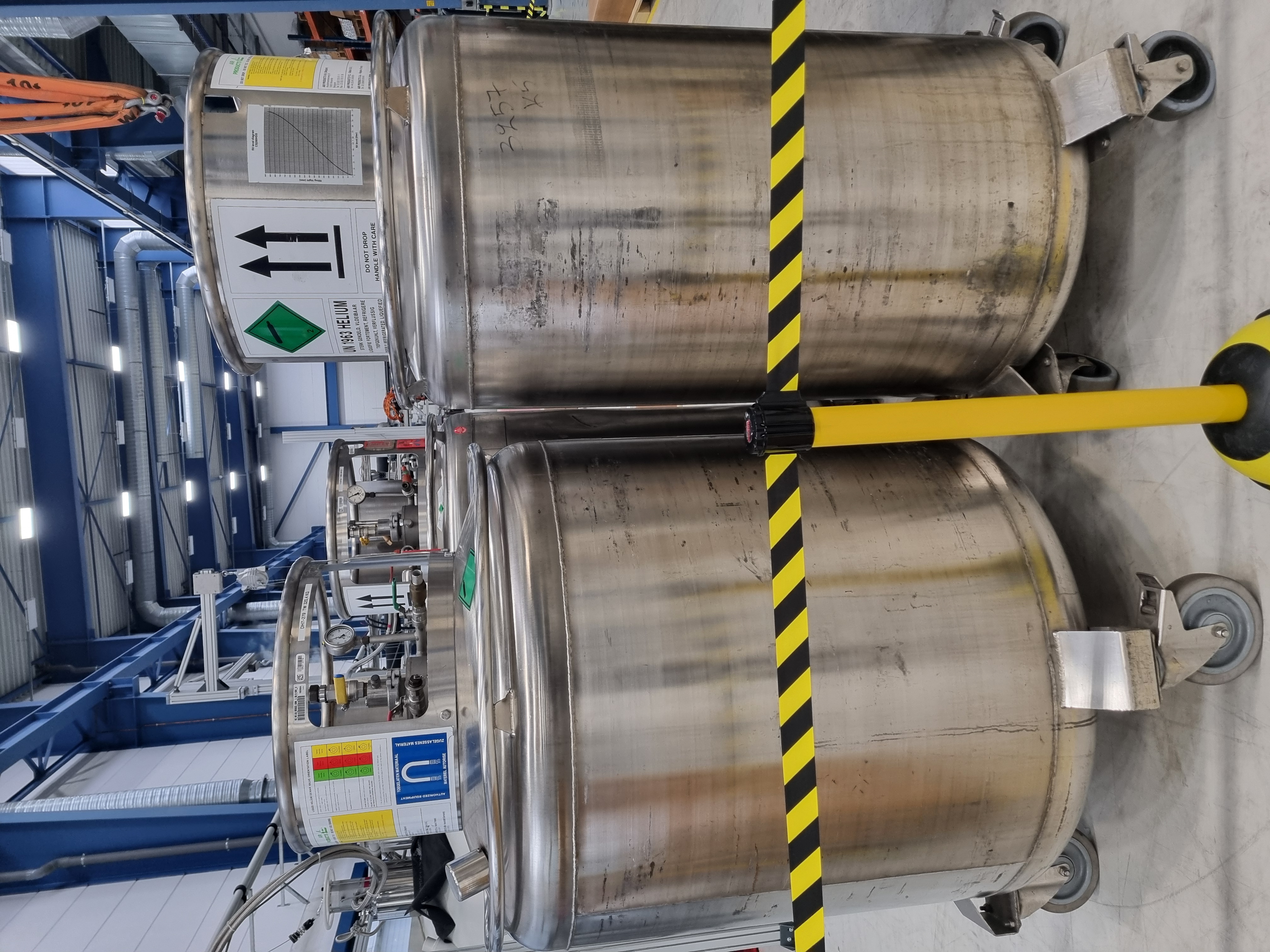
Helium supply is measurable, but the commercial allocation mechanism that determines whether hospitals or semiconductor fabs receive scarce volumes is not.
Helium is recovered as a by-product of natural-gas processing, and MRI magnets have no substitute cryogen at their operating temperature. Qatar supplies roughly a third of world output, while US import dependence has shifted sharply from Qatar toward Canada without reducing Qatar's global importance.
The plausible allocation mechanism is recovery efficiency: a user that recovers more helium buys a smaller top-up and can absorb higher prices. Yet the reported gap between semiconductor fabs and MRI systems is single-sourced, and no public record shows how industrial-gas suppliers prioritise customers during shortage.
Public evidence brief5 cited findings behind the assessment
Question answered
Why do hospitals lose helium to semiconductor fabs?
This evidence layer is public and citable. The complete analysis, rankings, calculations, scenarios, and decision implications continue below.- Geography
- Qatar · United States · Canada · Global
- Sectors
- Healthcare · Semiconductors · Industrial gases · Natural-gas processing
- Risk classes
- By-product supply risk · Allocation risk · Supplier concentration · Clinical-capacity risk
- Potential impact
- MRI downtime or constrained imaging capacity if hospitals cannot secure replacement helium during a supply interruption, alongside higher costs and longer delivery commitments
- Time horizon
- Immediate · 2026–2030
Key findings and source trail
The evidence an outside reader can verify.
- 01
Qatar remains a central source of global helium even as the US has diversified its imports.
USGS data places Qatar at roughly 32% of global output while the US import mix shifted from 75% Qatari helium to 28%, with Canada rising to 47%.
- 02
MRI represents a material, non-substitutable helium use.
USGS reports MRI at about 15% of US helium demand. Superconducting MRI magnets require cryogenic cooling, leaving the installed fleet exposed to helium availability and recovery performance.
- 03
Rare-gas market shares are unusable unless their denominator is explicit.
The European Commission Joint Research Centre's rare-gases assessment provides the supply-chain context needed to distinguish production, trade, imports, and end-use shares rather than combining them into one concentration claim.
- 04
Ras Laffan's disruption is established, but its helium-specific damage is not.
Reporting documents the unprecedented Ras Laffan closure and the pressure on Qatar's gas economy, but no public assessment identified in the research separates damage to helium units from LNG infrastructure.
- 05
The recovery-rate allocation mechanism remains a hypothesis, not an established fact.
Industry research relayed through a secondary source reports higher recovery in semiconductor fabs than in MRI systems. The figure is directionally plausible but lacks authoritative, installed-base quantification, so it is treated as the claim most in need of verification.
Risk transmission
How the exposure reaches the decision.
- 01
A disruption to natural-gas processing or helium exports tightens an inflexible by-product supply.
- 02
Hospitals and semiconductor fabs compete through contracts, recovery efficiency, and willingness to pay.
- 03
Industrial-gas suppliers allocate available volumes among customers with different replenishment needs.
- 04
Hospitals with higher boil-off or weaker contractual protection face a larger replacement requirement.
- 05
Helium scarcity becomes MRI downtime and reduced clinical scanning capacity.
Entities and topics
- Ras Laffan
- Qatar helium producers
- Hospitals and MRI operators
- Semiconductor fabs
- Industrial-gas suppliers
An MRI scanner cannot run without liquid helium, and there is no substitute for it at the temperatures a superconducting magnet needs. That much is settled. What is not settled — and this is the uncomfortable part — is who decides whether a hospital or a semiconductor fab gets the helium when there is not enough for both.
The supply side is documented to a high standard. The US Geological Survey puts Qatar at about 32% of global helium output and records MRI at 15% of US helium demand — primary figures from the standard source for the commodity.
USGS also tracks a shift that most commentary has missed entirely. Qatar fell from 75% to 28% of US helium imports while Canada rose to 47%.
The allocation side is not documented at all. The claim that fabs recover 95%+ of the helium they use against MRI's 70–80%, and will therefore outbid hospitals, appears in this vault as a single-sourced figure relayed through a secondary outlet. Our own note flags it: the outbidding claim is single-sourced, and the recycling gap lacks authoritative quantification.
So the best-evidenced facts about helium are the ones that matter least to a hospital, and the mechanism that actually sets its scanning capacity is the one nobody has measured. That asymmetry is this article. It is not a gap in our research; it is a gap in the public record, and it sits underneath a clinical capability.
1. What is genuinely established
Helium is a by-product. It is separated from natural gas during processing, which means nobody produces helium on purpose — output is set by how much gas the world processes and by which fields happen to be helium-rich. That single fact explains most of what follows, because it decouples helium supply from helium demand entirely.
On USGS figures Qatar supplies about 32% of world output. Two other things are established and worth stating flat: MRI has no substitute cryogen at operating temperature, and MRI accounts for about 15% of US helium demand. A hospital cannot engineer its way out of this input the way it can substitute a drug or a device.
The third established fact is the one usually reported as reassurance. US import dependence on Qatar collapsed without any policy intervention — 75% to 28%, with Canada rising to 47%. It is one of the few genuine de-concentrations recorded anywhere in this vault, and it happened commercially.
2. Ras Laffan closed in March 2026, and nobody has published what was damaged
A drone attack forced an unprecedented closure of Ras Laffan in March 2026. The consequences for gas are already visible in the schedule: North Field East start-up slipped from end-2026 to at least 2027, with completion reported moving to mid-2028, and EPC contractors withdrew. Qatar's real GDP is projected to contract 5.7% in 2026.
The slippage has two causes and merging them would be an error. The earlier slips were commercial and contractual. The later push followed the attack. A commercial delay reprices; a security delay reprices and changes the insurance, the contractor pool and the counterparty terms.
For helium the relevant question is narrower and it is unanswered. No published assessment of the physical damage at Ras Laffan was found — that is an open question recorded in our Qatar note, not a gap in this article's research. Helium separation units and LNG trains are different plant. Whether the helium units were hit, degraded or untouched decides whether this is a live supply event or merely the context in which allocation gets tighter.
We cannot say which. Anyone claiming a helium supply shock from Ras Laffan is asserting something the public record does not currently support, and anyone claiming there is no exposure is doing the same in the other direction.
3. The US left Qatar, and no source says who replaced it
Here is where the global picture separates from the American one, and where most analysis stops too early.
The US reduced its Qatari dependence from 75% to 28%. Qatar's share of world output did not fall — it remains about 32% on USGS figures. Helium is not consumed by the country that mines it, and a producer that loses one buyer sells to another.
So the volume the US stopped buying went somewhere. No source in this vault says where. That is the single most consequential unknown in this chain: the exposure did not close, it moved, and we cannot name who absorbed it.
The structural consequence holds regardless. Any health system outside the North American supply orbit is now, on average, more exposed to Qatari helium than it was before the US diversified, because the same output is being shared among fewer alternative buyers. That is arithmetic on the direction of the shift, not a sourced finding about any particular country, and it should be read as exactly that.
4. The mechanism that decides who loses is the weakest-sourced link in the chain
Helium is not really consumed. It is lost. A fab or a hospital buys a volume, uses it, and recovers some fraction; the rest vents to atmosphere and is gone permanently, because helium light enough to escape a recovery system is light enough to escape the planet.
That makes the recovery rate, not the purchase price, the number that decides who can afford to keep buying in a tight market. A user recovering 95% of its helium is buying a small top-up. A user recovering 70% is buying nearly a third of its inventory again every cycle. When supply tightens the first user can absorb a price rise the second cannot, and the two are bidding for the same molecules.
The reported figures are 95%+ for semiconductor fabs against 70–80% for MRI, with fabs also described as willing to pay whatever is required. If those numbers are right, hospitals lose the allocation contest on engineering rather than on politics, and no amount of supply diversification changes it — the loser is determined after the helium arrives in the country.
But those numbers are single-sourced, relayed through a secondary outlet, and our own register warns that the recycling gap lacks authoritative quantification. The same source projects semiconductors rising from 24% to 30% of global helium demand by 2030, on the same weak footing.
This is the honest position and it is worth stating plainly rather than burying: the mechanism is plausible, mechanically coherent, and consistent with how by-product commodities allocate under scarcity — and it rests on one citation. It is the claim in this article most worth attacking.
5. Four firms allocate, and neither end user is in the room
The industrial-gas industry is a four-firm oligopoly. Our materials note is careful about this: the four-firm structure is well corroborated even though the market-share figures attached to it are not, and the same oligopoly supplies hospitals and steelworks from the same molecules.
That matters because it removes the market-clearing story. In a tight year, allocation is a commercial decision taken inside four companies against long-term contracts, take-or-pay terms and customer relationships — not an auction that a hospital procurement team can win by bidding up.
Which produces the specific blind spot this article exists to name. A hospital's ability to run an MRI is set by a semiconductor fab's willingness to pay for helium, and neither party is aware of the other. The fab has no view of the imaging queue it is displacing. The hospital has no visibility of the fab expansion that tightened its supplier's allocation. There is no price signal that travels between them, because the decision is made by a third party neither of them negotiates with directly.
6. What would break this argument
Three things, and each is a real possibility rather than a formality.
If MRI recovery rates have already converged with fab rates, the mechanism collapses. Modern zero-boil-off and helium-recovery scanner designs recover far more than older installations, and this vault holds no data on the installed-base mix by recovery technology. A fleet that has already upgraded is not exposed in the way this article describes.
If allocation is contractual rather than price-set, the outbidding story is wrong in its specifics even if hospitals still lose. Long-term supply agreements might protect a large health system better than a spot-market framing suggests — or worse, if the contracts sit with the fabs.
If Ras Laffan's helium units were untouched, §2 is context rather than a trigger, and the article becomes purely about structural allocation with no live supply event behind it.
Two further gaps are named rather than resolved: nobody in this vault has sized AI-driven fab helium demand growth, and nobody has established who absorbed the Qatari volume the US stopped buying.
7. What to watch, and the one thing a health system controls
Three signals would move this from mechanism to finding. A named production or export disruption at a helium facility, or a declared allocation regime from one of the four gas majors — that is the materiality floor this vault already sets for a helium event, and it deliberately excludes generic shortage narratives. A published damage assessment for Ras Laffan separating helium units from LNG trains. And an authoritative quantification of the recycling gap — a regulator, a standards body or a peer-reviewed source rather than a vendor — which would either confirm the mechanism or kill it.
The action is narrower than the analysis, and it is the only variable on the hospital's side of the contest. Audit helium recovery rate across the installed scanner fleet, by machine. A health system that does not know which of its magnets are zero-boil-off and which vent cannot know whether it is the 95% buyer or the 70% buyer in the next tight market — and on the mechanism described here, that single number decides whether it keeps scanning.
It is a cheap thing to establish, and unlike everything else in this chain it does not depend on anyone publishing anything.
Sources
- authoritative · USGS — Helium statistics and information — Qatar ~32% of global output; US imports from Qatar 75%→28% with Canada now 47%; MRI 15% of US helium demand
- authoritative · EC Joint Research Centre — Rare Gases, JRC130349 — the rare-gas denominator discipline applied here: a share figure without its denominator is unusable
- researched · Qatar LNG and Ras Laffan reporting — drone attack forcing an unprecedented closure of Ras Laffan; North Field East slipping to at least 2027 and completion reported moving to mid-2028; EPC contractor withdrawals; real GDP projected to contract 5.7% in 2026. ⚠ no published assessment of physical damage or repair timeline was found — recorded as an open question in [[01-Knowledge/Countries/Qatar]]
- scaffold · IDTechEx, relayed via the New York Times — semiconductor helium recovery 95%+ against MRI's 70–80%; fabs "will pay whatever they need to pay"; semiconductors rising from 24% to 30% of global helium demand by 2030. ⚠ Single-sourced and relayed through a secondary outlet. The recycling gap lacks authoritative quantification. This is the mechanism the article rests on and the claim most worth attacking
- scaffold · [Emergen Research, via 01 Knowledge/Sectors/Materials and Chemicals](https://www.emergenresearch.com/) — the four-firm industrial-gas oligopoly. ⚠ the structure is well corroborated; the market-share figures attached to it are not, and none are used here
- scaffold · Our reading, 2026-08-31 — that the Qatari volume the US stopped buying was absorbed elsewhere, leaving non-North-American health systems on average more exposed than before. ⚠ No source establishes who absorbed it. This is directional arithmetic on the shift, not a finding about any named country
- scaffold · Tier resolution, 2026-08-31 — the Qatar helium share is carried at
authoritativeon USGS. 01 Knowledge/Sectors/Materials and Chemicals tiers a related figure (">30% from Qatar and the US") asscaffoldon a vendor source; it is a vaguer, differently-grouped claim from a weaker source, and USGS supersedes it. Internal adjudication, not an external source
Continue the thread
Get the next material change, not the next headline.
Receive new UFOQ briefings and concise signal updates when the evidence changes enough to matter.