The magnet in everything, and the country that decides who gets one
China makes 98% of the world's traded rare-earth magnets. The surprise is what happens if it never restricts them again, and why that is the outcome Western producers should fear most.
- Horizon
- Immediate · 2026–2030
- Signal strength
- High · observed and scenario
- Decision lens
- Supply chain · Industrial policy · Robotics
- Reading time
- 14 minutes
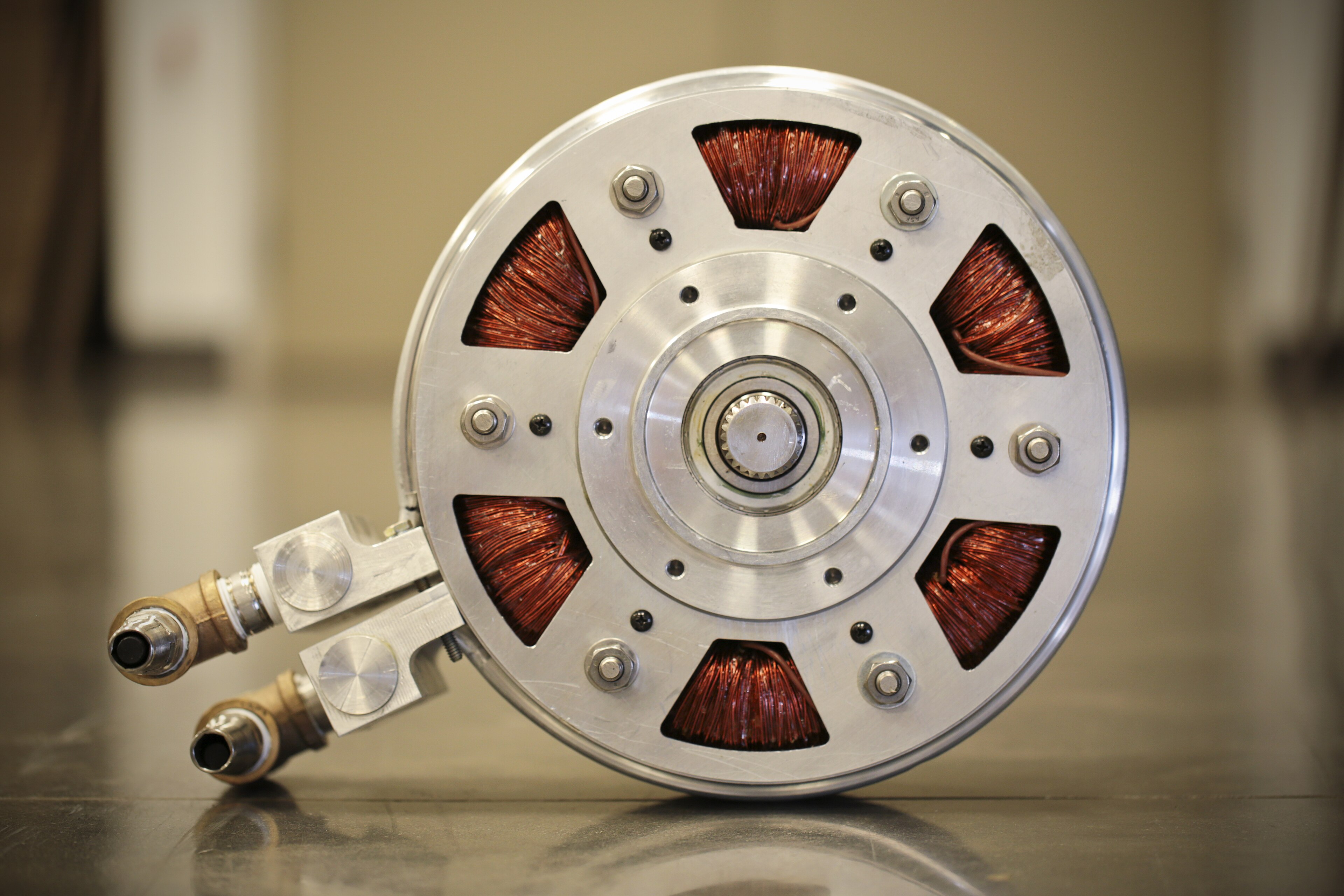
China's rare-earth magnet leverage is strongest when it keeps supply abundant enough to prevent alternatives from becoming economic.
Rare-earth magnets sit inside electric vehicles, wind turbines, guided weapons, industrial machinery and the motors used throughout a humanoid robot. China holds roughly 94% of sintered magnet manufacturing and 98.1% of net magnet exports, but its leverage lies less in total tonnage than in deciding which customers receive reliable access.
Hard restrictions create immediate shortages, but they also raise prices and accelerate competing supply, substitution and redesign. Continued abundance does the opposite: it keeps downstream industries supplied while starving non-Chinese projects of the economics they need to survive. The comfortable scenario may therefore produce the deepest long-term dependency.
Public evidence brief6 cited findings behind the assessment
Question answered
What happens to the world under different Chinese rare-earth magnet supply scenarios?
This evidence layer is public and citable. The complete analysis, rankings, calculations, scenarios, and decision implications continue below.- Geography
- China · European Union · United States · India · Japan
- Sectors
- Electric vehicles · Wind power · Defence · Robotics · Critical-mineral processing
- Risk classes
- Supply-chain concentration · Export-control risk · Industrial-policy risk · Technology substitution risk
- Potential impact
- Severe for defence, vehicle, wind and robotics supply chains if access tightens; strategically damaging if cheap supply prevents alternatives from reaching commercial scale
- Time horizon
- Immediate · 2026–2030
Key findings and source trail
The evidence an outside reader can verify.
- 01
The bottleneck is the finished magnet and its processing chain, not the geology alone.
China accounts for roughly 94% of sintered magnet manufacturing, while UFOQ's calculation from UN trade data places it at 98.1% of net magnet exports. The small size of the magnet market conceals its importance to much larger downstream industries.
- 02
Europe and the United States are receiving materially different access under the same Chinese policy.
Chinese customs data reported for January and February 2026 shows 4,775 tonnes shipped to the European Union against 994 tonnes to the United States. US shipments had fallen every month since October 2025.
- 03
Licensing can ration access without announcing an embargo.
General licences covering repeated shipments went to European buyers, while American buyers saw no comparable increase. Separate yttrium data shows US receipts falling to 17 tonnes during restrictions from 333 tonnes in the preceding eight months.
- 04
The price pattern points to an access problem rather than a uniform physical shortage.
In March 2026, terbium oxide was assessed at $803.96 per kilogramme inside China, $1,182 FOB China and $4,900 delivered into North America. The widening premium outside Chinese jurisdiction is consistent with licensing, counterparties and delivery access shaping the market.
- 05
Cheap supply can weaken diversification more effectively than a hard restriction.
GKN cancelled its planned European magnet factory and Ucore's refining timetable moved from 2025 to 2027, with low prices constraining investment. The US Department of Defense's support for MP Materials included equity, guaranteed offtake and a $110 per kilogramme price floor, showing that market prices alone do not sustain the alternative supply base.
- 06
Robotics turns magnet access into a production constraint, not merely a cost input.
A humanoid robot contains roughly forty motors and more than 95% use rare-earth magnets. That intensity makes secure supply relevant to whether producers can scale complete machines, especially when access is allocated unevenly.
Risk transmission
How the exposure reaches the decision.
- 01
China controls most finished rare-earth magnet supply and the processing capacity behind it.
- 02
Licensing determines which countries and companies receive predictable access rather than merely how much material exists.
- 03
Selective access produces different delivered prices, production certainty and inventory behaviour across markets.
- 04
Low prices suppress competing projects, while high prices fund new supply and accelerate reduced-magnet designs.
- 05
The long-term dependency can therefore deepen most in the short-term scenario that appears least disruptive.
Entities and topics
- China
- European Union
- United States
- MP Materials
- GKN
- Ucore
- Lynas
- US Department of Defense
In January and February of this year, China shipped 4,775 tonnes of rare-earth magnets to the European Union.
Over the same two months, it shipped 994 tonnes to the United States.
Same product. Same policy. Same weeks. Europe received nearly five times as much.
That gap is not an accident of demand, and it is the thread this article pulls. It leads somewhere genuinely counter-intuitive: the scenario Western magnet producers should be most afraid of is not China restricting supply. It is China deciding never to restrict it again.
1. First, what a magnet actually does
Rare-earth magnets are the most consequential product most people have never thought about.
They are not the magnets on your fridge. Those are ferrite: cheap, weak, and fine for holding up a photograph. Rare-earth magnets, mostly a neodymium-iron-boron alloy, are perhaps ten times stronger by weight, and that strength is the whole point. It means you can build a motor that is small and powerful at the same time.
Which is why they are inside almost everything that moves or spins in a modern economy.
The motor driving an electric car. The generator in a direct-drive wind turbine. The tiny actuators in your phone's camera, the voice coil in a pair of headphones, the read head in a hard drive. MRI scanners. Guided missiles. Fighter aircraft control surfaces. Industrial robots.
And the newest one, which is where this gets interesting. A humanoid robot contains roughly forty motors, and more than 95% of them use rare-earth magnets. Forty, not one or two, because a machine that walks and grips needs a motor at every joint.
Compare that with a car. An electric vehicle uses roughly one to two kilogrammes of rare-earth material in its traction motor. A direct-drive wind turbine uses something closer to 600 to 800 kilogrammes per megawatt. The intensity varies enormously by application, and every one of those applications is growing at once.
Then there is the size of the market itself. The entire world trade in rare-earth magnets, every tonne that crosses a border net of what comes back, is about $3.5 billion.
That is roughly 1.7% of the value of the integrated-circuit trade. It is smaller than the annual revenue of a mid-sized company. Nobody builds a national industrial strategy around a $3.5bn market, and for thirty years nobody did.
That is exactly why it became a chokepoint. A market small enough that no government defends it, sitting underneath industries (vehicles, power generation, defence, robotics) that every government cares about intensely. The leverage is enormous precisely because the thing itself looks trivial.
2. The bottleneck is not where you would look for it
Most coverage gets the first thing wrong. Rare earths are not rare. They are reasonably well distributed in the earth's crust, and several countries have deposits.
The chokepoint is not the mine. It is what happens afterwards.
Turning rare-earth ore into a usable magnet means separating chemically near-identical elements from one another, then refining them, then alloying and sintering them into a finished part. That process is capital-intensive, chemically demanding, environmentally difficult to permit, and commercially unglamorous. It earns thin margins on a small market.
So for decades, everyone was content to let someone else do it. China did it.
The result, on IEA figures and our own computation from UN trade data: China holds roughly 94% of world sintered magnet manufacture, and 98.1% of net magnet exports. Two different measurements of two different things, both pointing the same way. The entire tier-one production base outside China is Japanese: Shin-Etsu, TDK, Proterial and Daido Steel. Together they are under 5% of global supply.
The part that took us longest to see
For a long time we read this the obvious way: China has the tonnage, therefore China has the power.
The 2026 data says something more precise, and more uncomfortable. The leverage is not in how much China makes. It is in who China decides to serve.
Two pieces of evidence point at this, and they were gathered by completely different methods, which is what makes them worth trusting.
The first is the volume split we opened with. In January and February 2026 the EU took 4,775 tonnes and the United States took 994. The EU is now 44.4% of China's magnet exports; America is 9.2%, its third-largest customer. US shipments have fallen every single month since October 2025.
The mechanism behind that has now been identified, and it is subtler than a ban. China issued its first batch of general licences, meaning permissions covering repeated shipments over a set period rather than approval consignment by consignment. Those went to European buyers. American buyers saw no comparable increase.
Think about what that means in practice. It is not a quota anybody can point to and dispute. It is a decision about who gets a standing permission and who has to ask again every time. That is far cheaper to operate than an embargo, and far harder to negotiate against, because there is no published number to argue with.
The effect on specific materials can be extreme. Between April and December 2025, China exported 17 tonnes of yttrium to the United States. In the eight months before restrictions, it exported 333. That is 5.1% of the previous rate.
The second piece of evidence is in the price, and it is the one we find most persuasive.
Terbium oxide, one of the heavy rare earths that lets a magnet keep working when hot, traded in March 2026 at three quite different prices at the same moment:
- $803.96 a kilogramme inside China
- $1,182 loaded on a ship leaving China, a 47% premium
- $4,900 delivered into North America, 6.09 times the Chinese domestic price
Dysprosium and neodymium show the same shape at smaller magnitudes: 67% and 63% premiums respectively just to get out of the country.
If the world were simply short of terbium, the premium would be roughly flat once the material left China. Scarcity of a physical good raises the price everywhere more or less equally.
That is not what the numbers show. The delivered-into-America price is 4.15 times the export price alone. The premium keeps climbing the further you get from Chinese jurisdiction.
That is not the signature of a shortage. It is the signature of an access problem: of licences, of approved counterparties, of somebody deciding whether your shipment is worth the paperwork. This is our reading of the price structure rather than anything a source states outright, but the shape is hard to explain any other way, and it agrees with the licensing evidence that came from an entirely separate direction.
3. Three worlds
So what actually happens next? Here are three futures, and the useful thing is that they are not simply better and worse versions of the same story. They are different in kind, and the one that feels best in the short run is the most dangerous in the long run.
World one: the abundance trap
China restricts nothing. Licences flow. Prices fall.
At first this looks straightforwardly good, and for most people it is. Magnets get cheaper. Electric cars get slightly cheaper to build. Wind farms get built faster. Robotics companies scale without worrying where their motors come from. Anyone who spent 2025 stockpiling looks foolish.
And quietly, over about three years, every attempt to build an alternative supply chain dies.
This is not speculation, because it is already happening at today's prices. GKN cancelled its European magnet factory in February 2026, the flagship plant Europe's whole strategy assumed. Ucore, backed by the Pentagon, planned to be refining by 2025 and now says 2027 at the earliest. American rare-earth investment has been held back not by geology or permitting but by prices too low to make the projects profitable.
Look at what it took to keep even one Western producer standing. The Pentagon did not give MP Materials a grant. It took a $400 million equity stake, guaranteed to buy the output, and guaranteed a price floor of $110 a kilogramme. That is not industrial policy as encouragement. That is an admission that the market will not fund this at all.
So in world one, the United States quietly waives its own deadline, a federal ban on buying Chinese rare earths and magnets that takes effect on 1 January 2027, now 134 days away, which the industry has already said it cannot meet. Europe keeps buying. India's programme struggles to justify itself against cheap imports.
By 2030, the West is more dependent than it is today, and every year of getting there will have felt like good news.
World two: the two-speed world
Roughly what is happening now. Volatile, licensed, uneven, and it continues.
Europe holds general licences and plans with reasonable confidence. America re-applies shipment by shipment and watches its volumes decline. Defence programmes slip, because defence has been explicitly excluded from every easing China has offered.
Prices stay in their three tiers. A Western magnet industry exists only where a government guarantees it, a floor here and an offtake contract there, and remains structurally uncompetitive everywhere else.
The most consequential thing in this world is happening in robotics. China is deliberately aligning its rare-earth supply and its humanoid-robot industry, which means Chinese robot makers build with secure, cheap, domestically priced magnets while their competitors negotiate for allocation. In a product needing forty motors per unit, that is not a cost advantage. It is a question of whether you can build the thing at all.
And the alliance politics get strange. Europe and America are not in disagreement here. They simply have different problems. One is managing a supply that mostly arrives; the other is managing one that mostly does not. Coordinating a response to a shared adversary is difficult when the adversary has carefully given you unshared experiences.
This is the world we would bet on, and it is worth saying why: it is China's best outcome. It earns revenue, retains leverage, and suppresses competitors, all at once. Nothing about the current posture suggests Beijing has found a reason to change it.
World three: the forced march
China restricts hard. The October 2025 package returns, the extraterritorial rule bites.
The near term is genuinely bad and we should not soften it. There is already a rehearsal on record: when China licensed seven heavy rare earths in April 2025, its magnet exports fell 51% in a single month and roughly 75% over two. Ford idled a line. Suzuki suspended a model. An Indian electric two-wheeler maker described going to a "zero month" of output.
Scale that up. Defence gets prioritised and consumers get rationed. Wind projects slip. Robotics takes it worst, because forty motors per unit cannot be designed around. An EV maker can rework one traction motor, but nobody is redesigning forty joints at once.
Then something else happens, which is why this world is not simply the worst one.
The prices that make Western projects uneconomic stop being uneconomic. The delivered premium that looks like a symptom becomes the incentive. Projects that cannot raise money at $110 a kilogramme raise it easily at multiples of that. Governments that were arguing about subsidies stop arguing. India's twenty bidders find their numbers work. Lynas, which began producing samarium in March 2026, suddenly has company.
Most importantly, the engineering moves. Magnet-free and reduced-magnet motor designs already exist and are improving. MP Materials, which has every commercial reason to argue the opposite, expects heavy rare-earth demand to fall as those designs advance. High prices and political urgency are exactly what turns that from a research programme into a product roadmap.
China wins the confrontation and loses the position. Every month of restriction funds its own replacement.
4. The paradox, stated plainly
Put the three worlds side by side and something uncomfortable appears.
Restriction raises prices, which funds the alternatives. Abundance lowers prices, which starves them. China cannot do both at once. And it means Beijing's leverage is at its absolute maximum in the world where it never uses it at all.
It also means Western policy is aimed at the wrong target. Everything currently built (stockpiles, price floors, purchasing bans, allied agreements) is designed for world three. Almost none of it survives world one, where prices simply drift down and projects quietly fail to reach a final investment decision.
The West is insured against the scenario it fears and exposed to the one it would welcome.
We would not want to overstate this. It is our reading of how the three futures interact, not something any source sets out, and reasonable people could weight the engineering response differently. But the mechanism is not in dispute: GKN and Ucore did not stall because China restricted anything. They stalled because magnets were too cheap.
5. What to actually watch
Four things, and only one of them is a number anybody currently reports.
Watch the type of licence, not the count. A general licence is a standing permission; a consignment licence is a leash. The split between who holds which tells you more about the next year than any tonnage figure.
Watch the ex-China premium narrowing. Counter-intuitively, that is the bad signal. A shrinking gap means Chinese prices are suppressing Western economics, which is world one arriving quietly.
Watch qualifications, not capacity announcements. A magnet maker qualifying a new supplier's material, as one did with Energy Fuels' heavy rare earths in August 2026, is worth more than any announced tonnage, because unqualified material cannot enter a production line at all.
And watch 1 January 2027. In 134 days the United States either enforces its own purchasing ban or waives it. Enforcement means accepting real shortages. A waiver is the clearest possible admission that diversification has failed on economics rather than on politics.
There are two other dates worth having in a diary, and they are commonly conflated into one. China suspended its October 2025 package until 10 November 2026. Separately, it suspended its 2024 controls on gallium, germanium, antimony and graphite until 27 November 2026. Two cliffs, seventeen days apart, on different materials, each able to lapse or extend on its own.
---
The thing worth carrying away is not that China dominates rare-earth magnets. Everyone knows that.
It is that a $3.5 billion market, 1.7% of the size of the chip trade, now sits underneath electric vehicles, offshore wind, guided weapons and every humanoid robot anyone intends to build. And that the country holding it faces a genuine dilemma of its own, because the leverage only works while it stays in the holster.
Sources
- researched · South China Morning Post — China's rare earth magnet exports to the US keep falling as Europe gains — Jan–Feb 2026 Chinese customs: EU 4,775 t (44.4% share) against USA 994 t (9.2%); decline every month since October 2025; general licences identified as the mechanism. ⚠ press reporting of Chinese customs data, not the customs release
- researched · CSIS — Rare Earth Export Restrictions One Year Later — the yttrium series (17 t against 333 t) and the uneven-licensing finding.
- researched · Fastmarkets — rare earth prices and S&P Global Platts — the three-tier price structure at March 2026: terbium $803.96 domestic / $1,182 FOB / $4,900 CIF North America; dysprosium $189.58 / $317; neodymium $113.05 / $184. ⚠ ex-China spot pricing is immature and much of the trade is bilateral and confidential, so delivered-West assessments rest on thinner liquidity than the Chinese domestic quotes
- authoritative · IEA — Global Critical Minerals Outlook 2026 — European heavy rare-earth prices around 5× Chinese domestic; rare-earth demand +50–90% by 2040.
- researched · IDTechEx — Rare Earth Magnets 2026-2036 — roughly 40 motors per humanoid robot, over 95% using rare-earth magnets.
- researched · Reuters / BNN Bloomberg — US industry struggles to meet the 2027 deadline — the 1 January 2027 federal purchasing ban; Ucore's slip from 2025 to 2027; low prices as the binding constraint on US investment.
- researched · Reuters (exclusive) — GKN cancels its European magnet factory, February 2026.
- researched · US Department of Defense / MP Materials — the $400m equity stake, $110/kg price floor and guaranteed offtake.
- researched · Bloomberg — MP Materials expects heavy rare-earth demand to fall as motor technology advances, May 2026. ⚠ the strongest counter-case here, and it comes from a party arguing against its own commercial interest
- researched · Pillsbury, Jones Day, CIRS Group — the two suspension expiries: MOFCOM Announcements Nos. 55–58, 61 and 62 until 10 November 2026; Article 2 of Announcement No. 46 of 2024 until 27 November 2026.
- researched · WSJ — Lynas begins samarium production, March 2026. Energy Fuels — heavy rare earths qualified by a major magnet producer, August 2026.
- scaffold · In-session arithmetic — the 4.80× EU/US tonnage ratio, the 5.1% yttrium residual, the 6.09× and 4.15× terbium price ratios, and magnets at 1.7% of the integrated-circuit trade. ⚠ not an external source; the access-scarcity reading of the price shape and the three-world paradox in §4 are ours, not any source's
Continue the thread
Get the next material change, not the next headline.
Receive new UFOQ briefings and concise signal updates when the evidence changes enough to matter.