The Russian-oil tariff law will pressure Moscow indirectly by forcing its largest customers to choose between cheap energy and the US market
The law turns access to the US market into leverage over Russia's largest energy customers, but its success depends on reducing Moscow's net revenue without driving oil prices and American import costs high enough to offset the pressure.
- Horizon
- Immediate / 1–3 years
- Signal strength
- Medium-high on direction · Medium-low on magnitude
- Decision lens
- Energy · Trade policy · Supply chains
- Reading time
- 10 minutes
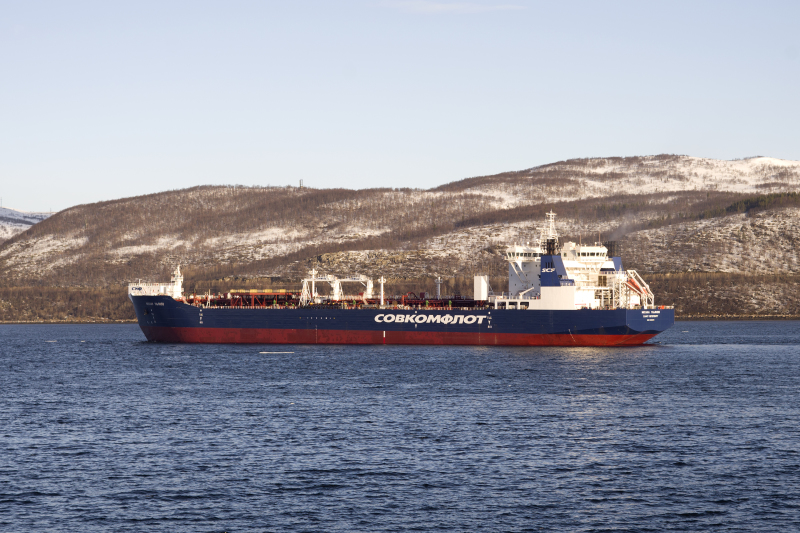
The law shifts pressure onto Russia's largest customers by forcing them to compare discounted Russian energy with continued access to the US market.
The immediate burden falls mainly on affected exporters, American importers and consumers. Major buyers are more likely to negotiate exemptions, reduce purchases selectively and demand deeper Russian discounts than to abandon Russian oil at once.
Over time, the law could redirect energy flows and supply-chain investment while accelerating alternative payment, shipping and trading systems outside Western control. Its success depends on targeted enforcement reducing Russia's net energy revenue without pushing oil prices and US import costs high enough to offset the intended pressure.
Public evidence brief5 cited findings behind the assessment
Question answered
How will the Russian-oil tariff law transmit through Russia's customers, US import costs and global energy trade?
This evidence layer is public and citable. The complete analysis, rankings, calculations, scenarios, and decision implications continue below.- Geography
- Russia · China · India · Türkiye · United States
- Sectors
- Oil and refining · Manufacturing · Shipping and insurance · Consumer imports
- Risk classes
- Secondary-tariff risk · Energy-price risk · Trade diversion · Sanctions evasion
- Potential impact
- Lower Russian netbacks and selective supply-chain relocation, offset in a hard-enforcement case by higher oil prices and US import costs
- Time horizon
- Immediate / 1–3 years
Key findings and source trail
The evidence an outside reader can verify.
- 01
The law uses US market access as leverage over major Russian-energy buyers.
The enrolled legislation authorises adjustable tariffs of up to 100% on goods from qualifying countries that continue to purchase Russian oil or gas.
- 02
Russia's crude exports are concentrated in three large customers.
CREA reports that China bought about 50% of Russian crude exports since December 2022, India 37% and Türkiye 5%, concentrating the policy's leverage and evasion risk.
- 03
Major buyers have strong incentives to seek partial compliance rather than an immediate exit.
Discounted Russian crude remains valuable to refiners, while China, India and Türkiye together also carry more than $400 billion of annual goods exposure to the US market.
- 04
Pressure can reach Russia through discounts even when physical volumes remain resilient.
CREA placed the August Urals discount to Brent near $22 a barrel, or 24%. Additional buyer risk can widen that discount and lower Russia's net revenue without removing every barrel from the market.
- 05
Enforcement must follow crude through refineries, tankers and third countries.
CREA estimated that sanctioned shadow tankers carried 52% of Russian seaborne oil in August, while refineries processing Russian crude exported €510 million of petroleum products to sanctioning countries.
Risk transmission
How the exposure reaches the decision.
- 01
The United States threatens tariffs on goods from major buyers that continue purchasing Russian oil or gas.
- 02
Targeted countries compare discounted Russian energy with the value of continued access to the US market.
- 03
Buyers negotiate, selectively reduce purchases or demand deeper discounts rather than exit immediately.
- 04
Russia accepts lower margins, pays higher logistics costs or redirects trade through less transparent channels.
- 05
Longer-term adjustment shifts energy flows, manufacturing investment, payments, shipping and insurance networks.
Entities and topics
- US government
- Russian oil exporters
- Chinese refiners
- Indian refiners
- Shadow tanker fleet
Executive conclusion
The law’s most important feature is not the tariff itself—it is the economic choice imposed on countries buying Russian energy.
China, India, Türkiye and other major buyers must now compare:
- the savings and refinery profits they receive from Russian oil; against
- the value of their exports and broader commercial access to the United States.
The law permits tariffs of up to 100% on almost all goods imported from countries that continue purchasing Russian oil or gas and qualify as major buyers. Rates can be adjusted when countries increase or reduce those purchases. Enrolled legislation, Section 113
The most likely result is not an immediate end to Russian oil purchases. It is a period of negotiation, partial reductions, deeper Russian discounts and attempts to reroute or disguise trade.
The policy will materially reduce Russian revenue only if the United States:
- applies credible tariffs to major buyers;
- tracks oil at the refinery level;
- prevents transshipment through third countries; and
- avoids removing enough Russian oil from the market to cause a major global price increase.
---
The law converts more than $400 billion of US market access into leverage over Russia’s largest oil customers
China, India and Türkiye account for the overwhelming majority of Russian crude purchases. Since December 2022, China purchased approximately 50% of Russia’s crude exports, India 37% and Türkiye 5%. CREA August 2026 analysis
These countries also have important US export exposure:
- US goods imports from China reached approximately $308.7 billion in 2025.
- US goods imports from India reached approximately $103.8 billion.
- US goods imports from Türkiye reached approximately $16.4 billion.
That gives the United States approximately $429 billion of combined goods-trade leverage over the three principal buyers. USTR China, USTR India, USTR Türkiye
However, imposing the maximum tariff would also damage US importers and consumers. This makes the 100% rate more credible as negotiating leverage than as the most likely rate applied across every product.
---
First-order impact: Tariffs immediately raise import costs, but Russia does not feel the full pressure yet
Expected timing: 0–3 months after implementation
1. Targeted exports become more expensive in the United States
The tariff directly increases the landed cost of goods imported from a designated country.
The immediate cost is divided between:
- US importers accepting lower margins;
- American customers paying higher prices; and
- foreign exporters cutting their prices to preserve US orders.
India’s most exposed products include smartphones, medicines, diamonds, jewellery, textiles, refined petroleum and industrial components. China’s exposure is concentrated in electronics, machinery, consumer goods, plastics and furniture.
Medicines, food and medical devices may receive humanitarian protection under Section 114, reducing the effective exposure of India’s pharmaceutical industry.
2. Governments and companies face a direct commercial choice
The affected country must decide whether the benefit of Russian oil exceeds the potential loss of US business.
This calculation differs by country:
- India has significant US exposure and can gradually replace some Russian crude, making negotiation and partial compliance likely.
- Türkiye has smaller US exposure but remains important as a refining and trading hub.
- China has the greatest US exposure but also the strongest ability and political willingness to resist American pressure.
- Slovakia and Hungary are more dependent on Russian pipeline infrastructure and have fewer immediate physical alternatives.
3. Uncertainty delays orders and investment before tariffs are collected
US buyers may pause orders, accelerate shipments or begin qualifying alternative suppliers before the final tariff rate is known.
This creates immediate working-capital and planning pressure for exporters, even if the eventual tariff is below 100%.
First-order conclusion: The initial economic shock falls on exporters and US importers. Russia is affected only when its customers change their purchasing behaviour.
---
Second-order impact: Buyers will negotiate, reduce purchases selectively and demand larger Russian discounts
Expected timing: 3–12 months
1. India and Türkiye are likely to reduce visible purchases before abandoning Russian oil completely
Russian crude remains attractive because it is discounted. In August 2026, the Urals discount to Brent was approximately $22 per barrel, or 24%. India purchased approximately €4.1 billion of Russian crude during that month alone. CREA August 2026 analysis
India and Türkiye are therefore likely to pursue several responses:
- reduce purchases enough to obtain US relief;
- seek country or product exemptions;
- shift purchases between state-owned and private refiners;
- use intermediaries or alternative payment structures;
- increase purchases from the Middle East, the United States, Africa or Latin America; and
- demand a larger discount from Russia to compensate for the tariff risk.
2. Russia must accept lower margins or find more difficult buyers
If major customers reduce demand, Russia must offer deeper discounts, pay higher transport and insurance costs, or sell through less transparent channels.
This would reduce Russia’s net revenue even if its physical export volume remains relatively stable.
Russia will probably respond by:
- expanding the shadow tanker fleet;
- increasing ship-to-ship transfers;
- using trading companies in third countries;
- accepting local currencies or barter arrangements; and
- redirecting cargoes toward smaller buyers.
The evasion system already exists: sanctioned shadow tankers transported 52% of Russian seaborne oil in August 2026. However, another 42% was still transported using G7-owned or insured vessels, showing that Western countries retain some leverage over the trade.
3. Alternative oil suppliers gain pricing and bargaining power
If India, China and Türkiye seek non-Russian oil, demand increases for comparable grades from:
- the Middle East;
- the United States;
- Brazil;
- Guyana;
- West Africa; and
- other non-sanctioned producers.
Refiners may face higher crude costs, longer shipping distances or technical adjustment costs. Airlines, transportation companies, chemical producers and consumers may eventually face higher fuel or input prices.
4. US companies begin shifting sourcing away from tariff-exposed countries
American importers will look for alternative suppliers in countries such as Vietnam, Mexico, Indonesia, Bangladesh and Eastern Europe.
This does not happen immediately. Smartphones, pharmaceuticals, machinery and industrial components require qualified factories, regulatory approvals and established logistics.
Therefore, the short-term result is likely to be higher costs; the medium-term result is selective supply-chain relocation.
Second-order conclusion: Russian oil flows will not disappear—they will become cheaper, less transparent and more expensive to transport, while non-Russian suppliers and alternative manufacturing locations gain business.
---
Third-order impact: The law could restructure energy trade and supply chains, but aggressive enforcement risks creating rival economic blocs
Expected timing: 1–3 years
1. Persistent tariff risk accelerates supply-chain relocation
Companies will become reluctant to concentrate production in countries whose entire US export base can be exposed because of their energy policy.
Over time, this could shift investment in:
- electronics and smartphones;
- textiles and consumer products;
- refining and petrochemicals;
- machinery and auto components; and
- energy-intensive manufacturing.
The beneficiaries would be countries that combine low production costs with reliable US market access.
2. China and Russia gain an incentive to build trade systems outside US control
If the tariffs are applied aggressively, China, Russia and other affected countries may expand:
- local-currency energy settlements;
- non-Western shipping and insurance networks;
- alternative financial messaging systems;
- bilateral commodity agreements; and
- trade relationships that avoid the United States.
This would reduce the effectiveness of future Western sanctions, although building credible alternatives would take several years.
3. Oil origin becomes more important than the exporting country’s name
Russian crude can be refined in India or Türkiye and sold as an Indian or Turkish petroleum product.
In August 2026, refineries in India, Türkiye, Brunei and Georgia that processed Russian crude exported approximately €510 million of petroleum products to sanctioning countries, including €143 million to the United States. An estimated €189 million of the total was refined from Russian crude.
This means country-level tariffs alone cannot fully close the channel. Effective enforcement will require refinery-level records, crude-origin tracing and monitoring of storage and transshipment hubs.
4. Tariffs increasingly become a foreign-policy enforcement tool
If successful, the United States may use access to its consumer market to influence other countries’ relationships with sanctioned states.
If unsuccessful, the policy may demonstrate the limits of secondary tariffs and encourage countries to reduce their dependence on the US market.
Third-order conclusion: The lasting impact may extend beyond Russian oil. The law could change where factories are built, how energy is financed and transported, and how countries balance access to the US against relationships with China and Russia.
---
The policy succeeds only if lower Russian volumes outweigh higher oil prices and US import costs
There are three credible paths.
Negotiated-compliance scenario — the most plausible near-term path
India, Türkiye and smaller buyers reduce visible Russian purchases and receive lower rates, exemptions or delayed enforcement. China makes limited concessions.
Russia accepts larger discounts, but most barrels remain in the global market.
Result: Moderate reduction in Russian revenue with manageable disruption to global oil supply.
Hard-enforcement scenario — the highest-impact path
The United States applies substantial tariffs to China, India and other major buyers, and those countries materially reduce Russian purchases.
If Russian barrels temporarily leave the market, global oil prices rise. This increases fuel and inflation pressure internationally and could partly offset Russia’s lost sales through higher prices on the oil it continues exporting.
Result: Greater pressure on Russia, but also substantial costs for US consumers, importers and the global economy.
Evasion scenario — the principal policy failure
Countries maintain Russian purchases through intermediaries, blended cargoes, refined products, ship-to-ship transfers and opaque ownership structures.
Trade becomes less transparent, but Russian export volumes and revenues remain resilient.
Result: Higher compliance and shipping costs without achieving a meaningful reduction in Russian income.
---
Five indicators will show whether the law is actually working
Management should monitor:
- The official country list and tariff rates published by the US government.
- Russian crude volumes purchased by China, India and Türkiye, measured by destination and refinery.
- The Urals-to-Brent discount—a widening discount would indicate greater Russian selling pressure.
- Russian export volumes and net revenues—volumes alone are insufficient.
- Refined-product exports from Russian-crude-processing refineries to the US and other sanctioning countries.
Final assessment
Overall, the law shifts pressure onto Russia’s largest customers by forcing them to compare the benefits of discounted Russian energy with the value of continued access to the US market. In the short term, the cost will fall mainly on affected exporters, American importers and consumers. Over the medium term, major buyers are likely to negotiate exemptions, reduce purchases selectively and demand deeper discounts from Russia rather than abandon Russian oil immediately. Over the longer term, the law could redirect energy flows and supply-chain investment while encouraging alternative payment, shipping and trading systems outside Western control. Its success will therefore depend less on the headline tariff rate and more on whether targeted enforcement can reduce Russia’s net energy revenue without causing oil prices and US import costs to rise enough to offset the intended pressure.
Continue the thread
Get the next material change, not the next headline.
Receive new UFOQ briefings and concise signal updates when the evidence changes enough to matter.