Global Conflict Is Becoming a Shared-System Risk
Licences, insurance, supplier dependence, allocation rules and financing conditions can transmit conflict into the economy before infrastructure is destroyed.
- Evidence reviewed
- 3 October 2026
- Reading time
- 6 min read
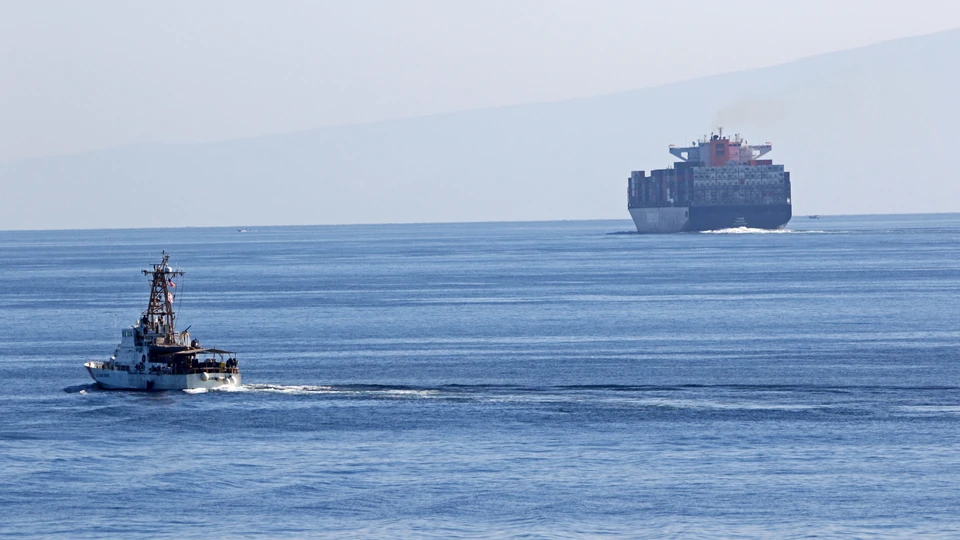
Only risks with an observed starting condition and a defensible transmission mechanism were retained.
Executive assessment
Today’s conflicts are creating five emerging risks beyond the battlefield:
- Chinese export licences can interrupt production before a formal ban.
- Marine insurance can reduce trade before a route is physically closed.
- Weapons dependence can turn procurement into political alignment.
- Energy disruption can become a long-term government financing problem.
- East Asian chip access can fail before fabrication plants stop producing.
The common risk is loss of access without physical destruction. A factory, port or energy route may remain intact, but licences, insurance, supplier permissions, allocation decisions or financing constraints can still prevent firms and governments from using it.
How the question was broken down
What emerging risks could result from today’s geopolitical conflicts?
- Can access be restricted without destroying an asset?
- Chinese export licences: Delays in export approval can prevent manufacturers from receiving critical materials in time, even when those materials are available and trade is not formally banned.
- Marine insurance: Ships may not sail if insurance is unavailable or unaffordable, restricting energy deliveries and trade even while the route remains physically open.
- East Asian disruption: A blockade, withdrawal of shipping insurance or export restriction could prevent chips from reaching customers even while factories continue producing.
- Can dependence change political behaviour?
- Weapons suppliers: Countries rely on their suppliers for ammunition, spare parts, software and maintenance. The cost and time needed to switch suppliers can deepen long-term dependence and encourage closer political alignment.
- Can temporary conflict costs become permanent?
- Energy costs, borrowing and defence spending: Higher energy costs can sustain inflation and borrowing costs while governments take on new debt for defence and support measures. Interest payments and multi-year defence commitments can keep budgets under pressure after the immediate shock has eased.
Only risks with an observed starting condition and a defensible transmission mechanism were retained.
Emerging risk 1: Chinese export licences can interrupt production before a formal ban
Evidence: China accounted for 91% of magnet-rare-earth refining and 94% of sintered permanent-magnet production in 2024. It also applies export controls to gallium, germanium, graphite and selected rare earths. The IEA reports that the April 2025 rare-earth controls disrupted downstream manufacturers. China’s official administrative benchmark is 45 business days, but no reliable public average is available.
Why this is an emerging risk: Defence systems, electronics, vehicles and renewable equipment depend on qualified materials and components, not only raw ore. A licence delay can force a manufacturer to use inventories, pay a premium or pause production even while exports legally remain open. The risk is therefore administrative friction spreading into civilian production before any formal embargo.
Emerging risk 2: Marine insurance can reduce trade before a route is physically closed
Evidence: Oil flows through Hormuz averaged 7.6 million barrels per day in August, compared with about 20.7 million before the war. Total Gulf oil exports were about 13 million barrels per day: the roughly 5.4 million-barrel gap reflects Saudi and UAE bypass or other non-Hormuz routes. The latest public market indication placed additional war-risk insurance near 3% of hull value per transit, compared with roughly 0.25% before the war. The premium varies by vessel and voyage and is not a universal price.
Why this is an emerging risk: The reduction in Hormuz traffic has several causes, including attacks, operator caution, storage constraints and insurance. Insurance is nevertheless a gatekeeper. If cover becomes unavailable or unaffordable, a vessel may not sail even when the route remains physically navigable. Conflict can therefore create a commercial closure before a military closure.
Emerging risk 3: Weapons dependence can turn procurement into political alignment
Evidence: China supplied 80% of Pakistan’s imported major arms in 2021–25. The United States supplied 95% of Japan’s and 93% of South Korea’s. Russia still supplied 40% of India’s. These figures exclude some ammunition, services and domestic production, but they show substantial supplier concentration.
Why this is an emerging risk: A weapons purchase creates continuing dependence on ammunition, spare parts, software, maintenance, training and political approval. When conflicts increase replenishment needs, changing suppliers becomes slower and more expensive. States may therefore align procurement, technology standards and foreign policy more closely with the countries able to sustain their military systems.
Emerging risk 4: Energy disruption can become a long-term government financing problem
Evidence: The Hormuz shock has raised energy, freight and insurance costs while governments are increasing defence and security spending. The OECD reports that the 2026 energy shock ended the global rate-cutting cycle, while the IMF identifies limited fiscal space and higher interest burdens. European SAFE financing has begun disbursing, and Israel and Saudi Arabia have reported higher 2026 defence pressure.
Why this is an emerging risk: Governments may have to borrow more for defence, reconstruction and household support at the same time that inflation keeps borrowing costs high. Oil prices may later decline, but interest, maintenance, personnel and weapons-replacement costs can continue. A temporary energy shock can therefore leave a longer debt-service and budget-allocation problem.
Emerging risk 5: East Asian chip access can fail before fabrication plants stop producing
Evidence: About three quarters of semiconductor value added is concentrated in five economies, four of them in Asia. Advanced logic production is concentrated in Taiwan, while South Korea is central to memory production. No active war, sustained blockade or major fabrication outage is currently present.
Why this is an emerging risk: Physical damage is not required to interrupt chip access. A blockade, withdrawal of shipping insurance, export suspension or customer-allocation decision could prevent chips from reaching users even while fabrication plants remain operational. The disruption would move quickly into AI infrastructure, cloud services, vehicles, telecommunications and defence electronics.
Overall assessment
The strongest emerging pattern is non-physical denial of access. Licences, insurance, supplier dependence, allocation rules and financing conditions can transmit conflict into the economy before infrastructure is destroyed.
Chinese licensing and Hormuz insurance already provide observable examples of this mechanism. Weapons-supplier alignment and fiscal pressure are developing structural risks. East Asian semiconductor disruption remains a latent scenario, but its cross-sector impact would be unusually large if activated.
Evidence base
- 2026 Global Conflict System — Defence and Cross-Sector Risk
- 2026 Global Conflict System Evidence Pack
- Russia-Ukraine War
- 2026 Middle East War and Strait of Hormuz Shock
- Red Sea Shipping Crisis
- 2026 Yemen Conflict Escalation
- 2026 Pakistan-Afghanistan Cross-Border Escalation
- 2026 Tigray Conflict Resurgence
What this means
For investors: The first signal may appear in insurance availability, delivery restrictions, supplier permissions or sovereign borrowing costs rather than physical damage. Exposure should be assessed through access to inputs and routes, not only ownership of assets.
For GCC corporates: The most immediate risks are shipping cover, access to imported technology and equipment, and the financing effects of prolonged regional disruption. A route or supplier does not need to close formally for operating conditions to deteriorate.
For governments: Procurement, trade permissions and borrowing decisions can create dependencies that last beyond the conflict. The central policy risk is treating a temporary emergency measure as a cost or alignment that can be reversed easily later.