The chokepoint is refining, not mining
Diversifying copper mines does not diversify the dependency. China's leverage sits downstream of the pit, in refining capacity that no new mine addresses.
- Horizon
- Structural · 2026–2035
- Signal strength
- High · observed concentration
- Decision lens
- Supply chain · Procurement · Industry
- Reading time
- 6 minutes
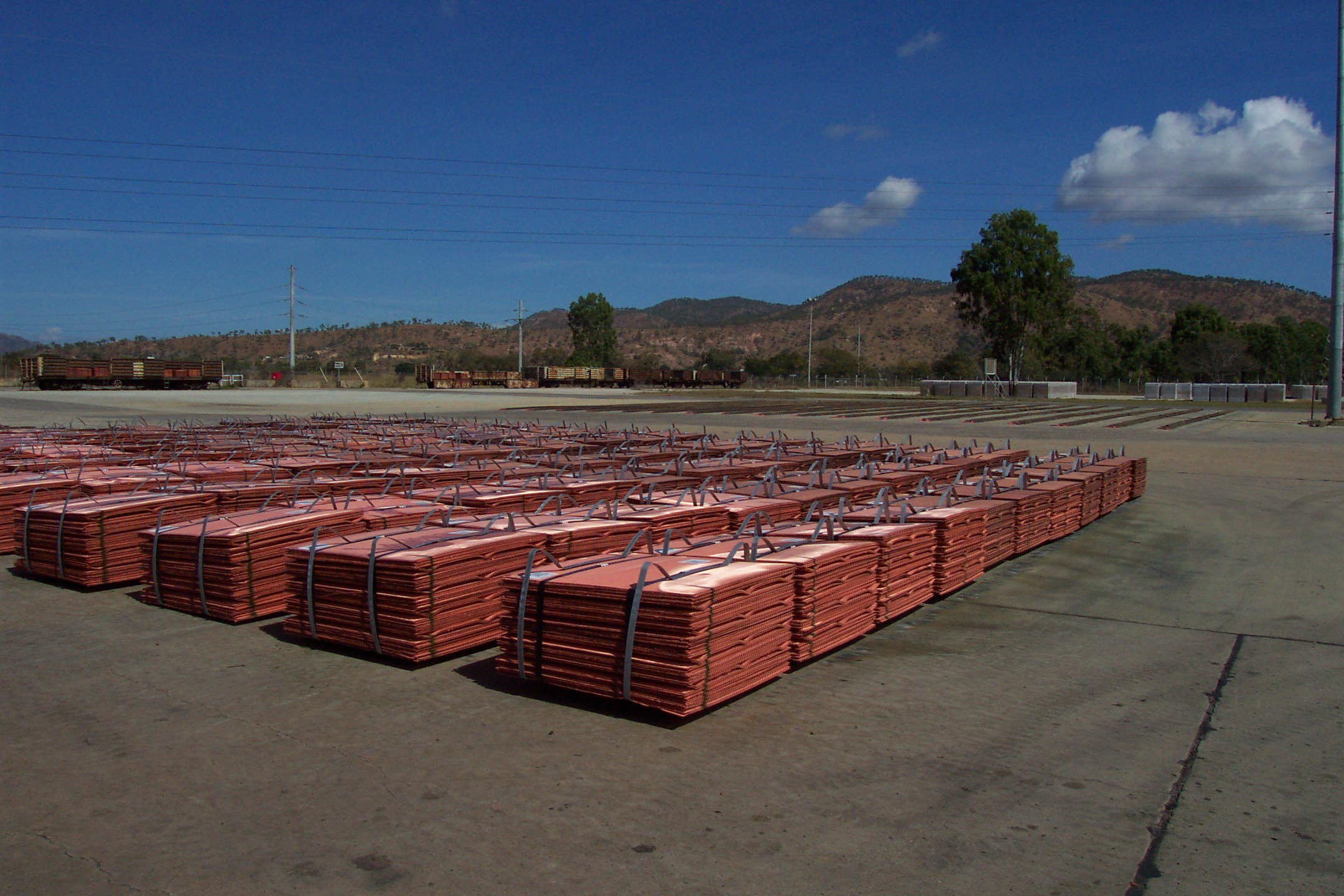
A supply-security strategy that stops at the mine stops one step too early.
China refines 44.4% of the world’s copper despite holding a much smaller share of mined supply. The gap matters because securing ore does not secure the capital-intensive processing step that turns it into usable material.
The same pattern appears across other critical minerals, while Indonesia shows how policy and downstream investment can manufacture concentration quickly. Exposure should therefore be sized around processing capacity, substitutability, and the time required to qualify an alternative—not simply around where the ore leaves the ground.
Public evidence brief5 cited findings behind the assessment
Question answered
Where is the real concentration risk in critical-mineral supply chains?
This evidence layer is public and citable. The complete analysis, rankings, calculations, scenarios, and decision implications continue below.- Geography
- China · Indonesia · Democratic Republic of the Congo · Global
- Sectors
- Mining · Mineral refining · Manufacturing · Energy transition
- Risk classes
- Supply-chain concentration · Processing chokepoint · Trade-policy risk · Substitution risk
- Potential impact
- High for buyers whose security strategy covers ore but not qualified processing capacity
- Time horizon
- Structural · 2026–2035
Key findings and source trail
The evidence an outside reader can verify.
- 01
China's copper position is much larger in refining than in mining.
USGS data place world refined copper output at 27,000 kilotonnes and China's refined output at 12,000 kilotonnes, or 44.4%. Securing ore from another country does not remove dependence on the processing step that converts concentrate into usable metal.
- 02
The mining step is less concentrated than the common headline suggests.
On USGS 2024 estimates, Chile, the DRC, Peru, China, and the United States account for 14,100 of 23,000 kilotonnes of mined copper, or 61.3%. That reinforces the article's conclusion that the sharper concentration sits downstream.
- 03
Cobalt diversification has not yet reduced mine concentration.
USGS estimates the Democratic Republic of the Congo at 76% of world cobalt mine production in 2024. The observed direction matters because a falling commodity price can weaken higher-cost alternatives and increase concentration rather than correct it.
- 04
Indonesia demonstrates how policy can create downstream concentration quickly.
Following restrictions on raw nickel exports, Indonesia expanded refined nickel output from 24,000 tonnes in 2014 to 636,000 tonnes by 2020 and built a much larger domestic smelting base. Ore policy and processing investment changed the supply-chain map within six years.
- 05
The Indonesian mechanism worked even though its legal basis remains contested.
A WTO panel ruled against Indonesia's raw-material measures in 2022 and the dispute remains under appeal. That is a durability risk to the policy mechanism, not evidence that the mechanism failed to create domestic processing capacity.
Risk transmission
How the exposure reaches the decision.
- 01
Buyers diversify mines and secure additional ore or concentrate.
- 02
Feedstock still enters a smaller and more concentrated refining system.
- 03
Refining policy, capacity, or trade restrictions determine usable material availability.
- 04
Manufacturers face price, qualification, and production disruption despite diversified mining supply.
- 05
Procurement must therefore map the complete mine-to-material chain rather than the pit alone.
Entities and topics
- US Geological Survey
- International Energy Agency
- World Trade Organization
- China copper refiners
- Indonesia nickel industry
- DRC cobalt industry
- CMOC
Every supply-security programme of the last decade has been aimed at mines. Governments funded exploration, signed offtake agreements, took equity stakes in deposits and wrote critical-minerals strategies around where things come out of the ground.
None of it touches the concentration that actually constrains buyers, which sits one step downstream.
Ore is not a usable input. Between the pit and the factory sits a refining step: smelting, separation, chemical conversion. It is there, not at the mine, that a handful of countries hold positions no new deposit changes.
Secure a new copper mine and you have secured feedstock. You have not secured supply, because the feedstock still has to pass through a refinery you do not control, in a country whose export policy you do not set.
The gap between what China mines and what China refines
World refined copper output is 27,000 kt a year. China accounts for 12,000 kt of that, or 44.4%.
Its share of copper mining is a small fraction of the same number. China buys ore from everywhere and turns almost half the world's copper into metal.
So the figure people reach for when they discuss copper concentration, the mining share, is measuring the wrong step.
The mining figure is also milder than usually reported, which widens the mismatch. On USGS 2024 estimates, Chile at 23.0%, the DRC at 14.3% and Peru at 11.3%, together with China and the United States, account for 14,100 kt of a 23,000 kt world total. That is 61.3%, not the roughly 70% commonly cited. The step everyone measures is less concentrated than the headline suggests. The step almost nobody measures is more.
Why the pattern repeats
This is not a copper story. It happens wherever the processing step is capital-intensive and the ore is not.
China holds a reported 90%-plus of battery-grade spherical graphite processing, and dominant rare-earth separation capacity. Both sit far above its corresponding mining share. Graphite is mined in several countries and turned into anode material in essentially one.
The reason is structural rather than strategic, at least to begin with. Refining is expensive, slow to build, hard to permit and commercially unglamorous. It attracts none of the political attention a mine does and earns thinner margins per tonne. Concentration accumulates at the stage with the highest capital intensity and the lowest political salience, because that is the stage nobody writes supply-security policy about.
Indonesia ran the same mechanism deliberately, and it is the clearest case available.
The government banned raw ore exports, comprehensively from 1 January 2020, so anyone who wanted Indonesian nickel had to process it inside Indonesia. Refined nickel output went from 24,000 tonnes in 2014 to 636,000 tonnes by 2020. Operational smelters went from 2 to 43, on roughly $30bn of largely Chinese investment.
That took six years. A country with ore and no processing industry became the processing industry, by making the ore unavailable in any other form. The mechanism is available to any resource-holding state willing to wear the transition cost.
What would prove this wrong
Two things would falsify the argument. Neither has happened.
The first is cobalt easing, as Western policy intended. A decade of diversification effort has been aimed at reducing DRC concentration.
It went the other way. On USGS figures the DRC reached 76% of world mine production in 2024, up from around 70% in 2019. CMOC alone produced 114,000 tonnes, roughly 33% of the world total from a single company.
The price behaviour should give diversification advocates pause. Over the same window cobalt fell 59.5%, from $41 to $16.62 a pound between May 2022 and May 2025. A dominant low-cost producer expanding through a price trough is not a market correcting itself. It is a market consolidating, because high-cost entrants outside the DRC cannot survive the trough the incumbent is causing. A glut of that kind increases fragility rather than reducing it, which is the opposite of what a buyer watching prices fall would assume.
The second is the Indonesian precedent being struck down. A 2022 WTO panel ruled the export ban inconsistent with trade rules. Indonesia appealed, and the dispute is unresolved.
So the concentration Indonesia built rests on a contested legal basis, and we would not want to overstate how durable the model is. But a ruling against it would be a risk to the mechanism, not evidence the mechanism fails. It plainly worked. The open question is whether others can copy it.
One caution applies to every figure here quoted to a decimal place. Gold production is disputed by about 10.94% between the World Gold Council's 3,661 tonnes and the USGS's 3,300 tonnes for 2024. Different methodologies, neither authoritative over the other. Where two sources measure the same quantity and no arbiter exists, both readings should travel together. Model both, average neither.
Why tonnage will mis-rank this sector
Weight the sector by volume and you will load heavily on iron ore, because iron ore is where the mass is. Per BGS production data, iron ore's 3.3 billion tonnes generated $130.65bn of Top-100 revenue, almost identical to gold's $131.81bn from a tiny fraction of the mass.
Volume and value have almost no relationship in mining, and concentration risk tracks neither reliably. It tracks the processing step. A model weighted by tonnage produces a confident ranking that loads on iron ore and misses the copper, graphite and rare-earth chokepoints completely.
What follows from this
A mine-diversification programme that does not also secure refining capacity has bought optionality on feedstock, not on supply. It hedges one risk, a specific country expropriating or a specific deposit failing. It does nothing about the risk that actually binds, which is a processing step in a jurisdiction that can decide who gets served.
So the question to ask of a supply chain is not where the material is mined. It is where the material is refined, how many places can do that, and what happens if the largest of them stops.
Sources
- authoritative · USGS MCS 2025 — Copper — 23,000 kt mined; Chile 23.0%, DRC 14.3%, Peru 11.3%; China refined 12,000/27,000 kt
- authoritative · USGS MCS 2025 — Cobalt — DRC 76%
- authoritative · USGS MCS 2025 — Gold — 3,300 t
- authoritative · USGS — Nickel — the 1 Jan 2020 export ban
- authoritative · IEA — Critical Minerals — smelter buildout, $30bn investment, 24,000 t → 636,000 t
- authoritative · WTO — DS592, Indonesia: Measures Relating to Raw Materials — 2022 panel ruling, under appeal, unresolved
- authoritative · BGS — World Mineral Statistics — iron ore 3.3bn t. ⚠ the vault's deep link (`www2…/wmp.html`) is dead — 404 confirmed 2026-08-16; this is the live landing page
Continue the thread
Get the next material change, not the next headline.
Receive new UFOQ briefings and concise signal updates when the evidence changes enough to matter.